Can regulating our airwaves help lower NCD rates?

Coutesy of blogs.worldbank.org

The carnival season just ended for many islands  (and is beginning for others) and one of the things that struck me while listening to radio stations from Dominica is the number of advertisements for businesses pushing high-saturated fat foods and alcoholic drinks. Now, I have to say that these ads are not just a carnival phenomenon. In fact, I think they’ve become quite prevalent on our airwaves. For example, one show might be sponsored by a large distributor of alcoholic beverages. Usually within such shows, the hosts painstakingly tells listeners to ‘drink safely’ and ‘don’t drink and drive’. What I noticed about these messages is that they are often said in somber tones while the music pumps up for a lively discussion of how such and such drink is the best to have while out and about. In regards to the food ads with high-fat content, they are often lauded as quick meals to have on-the-go. Grab a pizza! Get yourself some tasty fired chicken!

These commercials reminded me of a fabulous blog I read a few months ago titled “Is fried chicken setting back development in the Caribbean?” In the write-up, Carmen and Shiyan discuss how, in trying to decide what to eat for lunch (fried chicken because it’s ubiquitous, low-cost and fast), they realized the irony of working on addressing non-communicable diseases in the region and having to swallow their guilt and eat the fried chicken for lunch.

Carmen and Shiyan write:

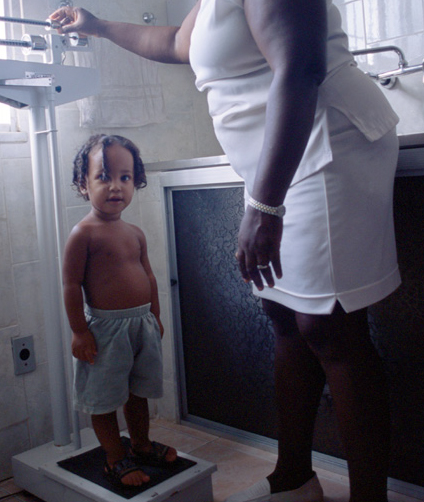
“This simple encounter brought to light the challenges countries and individuals face in addressing NCDs which as a group represent the leading causes of morbidity and mortality worldwide –two-thirds of global deaths are the result of chronic diseases. In the Caribbean, the burden of NCDs has escalated to the point that five times as many people are dying from chronic diseases than from all other illnesses combined.”

As we in the region and organizations around the world fight to change the course of the burden of NCDs, we have to start thinking of what role, if any, does advertising play in our food and alcohol consumption choices? Are there any regional or national policies that regulate what companies can advertise and at what times? The regulation of food, alcohol ( and tobacco) is never an easy task. But, research shows that local and global policies developed to regular tobacco sales and use has had the greatest impact on lowering smoking rates. If anyone has examples of laws and policies from the region that address these issues, we at CaribbeanHealth.org would love to know about them.


Gaming for health in the region

Last Thursday, I again joined the folks over at eSAC for their weekly tweet chats. I have to say, I really enjoyed the conversation. For me, one of the most interesting turns of the night was the discussion about digital literacy, health literacy and public ehealth.

The chat also touched on how people use various media in their everyday life, and whether these intersect with the health sector. For example, some young people use the internet daily, but never use it to look for health information.

This segment also got be thinking about how prevalent video games are in our society, and whether there are any interventions or programs in the region that uses video games for health promotion or disease prevention. I tried doing a general online search to find people or places for examples and came up with nothing. Well, I did come across an animation studio in Trinidad (as well at the animation program at the university of Trinidad and Tobago) that look to be doing some cool things. I did not find examples of any health projects but this is one lead I’ll continue to follow.

In the meantime, anyone interested in knowing more about this area, the talk below gives an excellent overview.

So, to all my CH people, do you know of any entity that is using any kind of video games/animation/claymation/ for health? If you are actively involved in any interactive projects addressing any health issue afflicting the region, we would love to share your project with our community.


Enhanced by Zemanta

Rally Round CARIMIS

The Caribbean Men’s Internet Survey (CARIMIS) is the first ever online study of the lives of men who have sex with men (MSM) in the Caribbean. And it is happening right now on www.carimis.com!

UNAIDS Caribbean needs your support to get maximum survey participation and the best possible data. Not only can this research answer key questions to help us respond more meaninfully to men who have sex with men in our region, but it could pave the way for learning about other hard-to-reach groups like sex workers.

You can help by:

1. Spreading the word;

2. Distributing discrete CARIMIS promotional cards;

3.Offering safe facilities for respondents to complete the survey;

4. Giving us information on how to reach MSM communities in your country.

Contact senior programme adviser, Michel de Groulard 

YouthActionNet® Global Fellowship Program – Applications open February 1st

Have you started an organization to foster change in your community? Maybe you run a mentorship program for disadvantaged youths or you started a non governmental organization that supports young people who have left the school systems. Regardless of your path, this opportunity below could give you the skills and knowledge to take your vision to the next level.

Launched in 2001 by the International Youth Foundation, YouthActionNet strengthens, supports, and celebrates the role of young people in leading positive change in their communities. Each year, 20 exceptional young social entrepreneurs are selected as YouthActionNet Global Fellows following a competitive application process.

For more information and to apply, visit their website at: http://www.youthactionnet.org/index.php?fuse=aboutfellowship

The year-long Fellowship program includes:

Skill-building:
• A seven-day leadership retreat for twenty selected Fellows which offers dynamic peer-to-peer learning, collaboration, and sharing among young visionaries
• Focus on the personal growth and leadership abilities of Fellows, in addition to providing instruction in specific skills required to manage innovative, world-changing organizations
• Year-round learning opportunities based on Fellows’ individual needs and the six dimensions of leadership highlighted in the YouthActionNet® Global Curriculum: Personal, Visionary, Political, Collaborative, Organizational, and Societal.

Networking and Resources:
• Access to potential resources to support Fellows and their projects, including volunteers, mentors, and grant opportunities
• Opportunities to network and collaborate with IYF projects and partners
• Membership in the YouthActionNet® global network of fellows and alumni

Advocacy:
• Training in areas such as communications planning, media outreach, message development, presentation skills, and innovative uses of new media technologies
• Access to global advocacy platforms and media coverage

Eligibility

  • Open to all young people aged 18-29 (as of October 07, 2012)
  • Applicants should be founders of existing projects/organizations, or leading a project within an organization.
  • Proficiency in English is required; applications must be submitted in English
  • Must be available to attend full retreat (all expenses paid) in the second week of October 2012.
For more information, visit their website at: http://www.youthactionnet.org/index.php?fuse=aboutfellowship
If you happen to find an opportunity through visiting this website, please come back here to caribbeanhealth.org  or send an e-mail to contact (at) caribbeanhealth.org and tell us about your experiences. We want to encourage all Caribbean nationals to participate in these global opportunities. You experience could help someone else.

Recap on Thursday’s #esac tweet chat

Although eHealth and similar concepts have been in the lexicon for almost a decade, if not more, there seems to be increased emphasis on harnessing the use of new and emerging technologies in healthcare/medicine and in public health. Last week’s eSAC (Public eHealth Innovation in Latin America and the Caribbean) tweet chat focused specifically on Public eHealth. As a participant in these chats, and someone looking to increase my knowledge of this area, I tried to get a clear definition (and examples) that differentiates ehealth from public health. Thanks @soroyajulian and @FelipeMejiaMedina for continuing to expand our understanding of these areas and how they are operationalized.

First:

https://twitter.com/#!/SoroyaJulian/status/162692742139490304

https://twitter.com/#!/SoroyaJulian/status/162692832925204480

As for examples:

https://twitter.com/#!/SoroyaJulian/status/162692742139490304

https://twitter.com/#!/FelipeMejiaMedi/status/162692713995710464

https://twitter.com/#!/FelipeMejiaMedi/status/162692485343232000

And finally:

https://twitter.com/#!/SoroyaJulian/status/162690874608852993

https://twitter.com/#!/FelipeMejiaMedi/status/162693044829831168

Below are a series of tweets that helps explain the two. Do you have anything else to add? Please share in the comments below. Also, don’t forget to join this week’s Tweet Chat at 7PM EST. Use #esac to follow and participate.