Quote

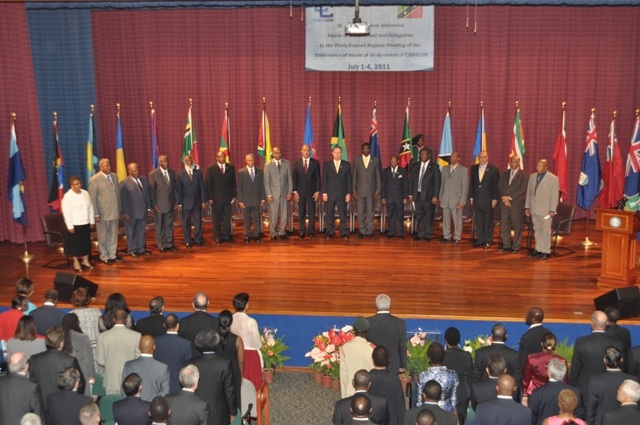
This past weekend, CARICOM members held the 32nd Meeting of the Conference of Heads of Government in St. Kitts and Nevis. Regarding health, nothing new came out of the meeting, but here’s a quick recap, courtesy of Caricom’s Communique:
  • Heads of Government noted the progress made in the sector across the Community over the past ten years to improve the health and well-being of the people and to contribute to economic development of the Region.
  • Heads of Government welcomed the entry into force of the Inter-Governmental Agreement (IGA), establishing the Caribbean Public Health Agency (CARPHA) which will have its Headquarters in Trinidad and Tobago. CARPHA is intended to advance the realization, embodied in the Nassau Declaration signed ten years ago (2001): the Health of the Region is the Wealth of the Region. In this regard, it is expected to highlight the opportunity costs of pursuing public health functions in a consolidated way, rather than as disparate entities, as existed until now, that duplicate efforts and dilute the public health objectives for which they were designed.
  • Heads of Government lauded the contribution of the Pan Caribbean Partnership Against HIV/AIDS (PANCAP), which has earned the accolade of an international best practice by the UN in the fight against the disease and noted with satisfaction its achievements as the partnership celebrated this year, the 10th Anniversary of the signing of the PANCAP Commitment.
  • Heads of Government applauded the positive contribution of the Community led by PANCAP at the recent UN High Level Meeting on HIV/AIDS. They noted that among the major Caribbean regional commitments contained in the outcome document were the elimination of mother-to-child transmission of HIV, reducing AIDS-related maternal deaths by 2015 and the need to ensure that financial resources for prevention are targeted to evidence-based prevention measures.
  • Heads of Government welcomed the significant role being played by the Community in advocacy and preparation for the UN High-Level Meeting on the Prevention and Control of Non-Communicable Diseases (NCDs) scheduled for UN Headquarters, New York, USA 19-20 September 2011.
As I said before, nothing sexy here, just business.
Quote

The International Diabetes Federation and Healthy Caribbean Coalition is publicizing a series of questions to ask President Obama at today’s Twitter Town Hall (@townhall).

To tweet your message to this Town Hall event, and have a chance of being addressed by the US President, please ensure you use #AskObama after your question. The Healthy Caribbean Coalition has suggested the following tweets:

10) #AskObama Will you attend the United Nations High Level Meeting on Chronic Diseases in September?

9) #AskObama Does Global health and the growing chronic disease epidemic have any impact on the USA economy and jobs?

8.) Can increased funding for the research and prevention of chronic diseases improve the productivity of America’s workforce? #AskObama #NCDs

7) #AskObama CDC reports smoking as a major risk factor for chronic diseases + costs USA 97 billion in lost productivity. What can be done?

6) The rise in Chronic Diseases has led to lost job productivity. Given the burden on US States, will you attend the UN Summit in Sept? #AskObama

5) Lost productivity due to chronic diseases hits small businesses the hardest. Does your admin support the UN global summit on NCDs? #AskObama

4) Can you have a healthy economy, without a healthy workforce? Will USA support the global UN Summit on Chronic Diseases in September? #AskObama

3)  #AskObama What is the importance of the historic United Nations Summit on Chronic Diseases for the American workforce and economy? #NCDs

2) In Sept, United Nations will hold the 1st ever summit on Chronic Diseases. Can this meeting +ively impact on USA jobs + economy? #AskObama

1) #AskObama Can tackling the chronic disease epidemic save jobs + increase productivity? If yes, will you attend UN Summit on #NCDs in Sept?

You can follow the Town Hall event live via webcast from the White House  http://askobama.twitter.com/ . The President will answer a selection of questions chosen by designated curators and respond live with a summary being placed on Twitter. If he addresses your questions (which we hope he will!) a summary of 140 characters will be retweeted to your profile.

Quote

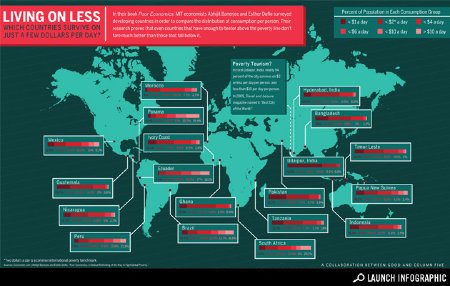
Millions of people around the world live on a few dollars a day. Even in the wealthiest of countries, some populations experience the greatest disparity. This graph, available at Good.is shows what percentage of a country’s population is living on <$10 and >$10.  It is disconcerting that no Caribbean countries were included.

A larger graph is available at http://awesome.good.is/transparency/web/1106/global-poverty/flash.html

Quote

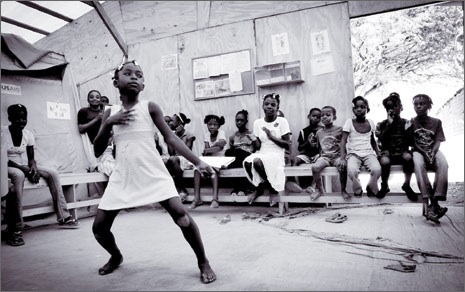
Earlier this month, Global Health Magazine announced the winner of it’s Women and Girls in Changing World photography contest. The winner took this beatuful photo of a young girl performing a dance about standing up to violence, in Port-au-Prince, Haiti. The girl has been living in a displacement camp since last year’s earthquake.

More photos as well as a short interview with the photographer Chessa Latifi
is available at http://www.globalhealthmagazine.com/cover_stories/photography_contest.

Quote

The headline said it all: Diabetes rates “doubles”. But where, and among whom? According to new research published online in the journal The Lancet global diabetes rates doubled to between 314—382 million in 2008 from 1980 rates. Although researchers at Imperial College and Harvard University analyzed data for both Types 1 and 2 diabetes, the researchers contend that the majority of people in the study (there were 2.7 million participants) were diagnosed with type 2 diabetes. The increase in prevalence since 1980 has been attributed to population growth and aging as well as by increasing age-specific prevalence. The Oceania region saw the largest rise, with prevalence still high in the Caribbean region. One of things the data shows is that rates are high in developing and middle income countries. Could it be that the rise in individual income directly impacts the kinds of food we eat? The type of activities we engage in? How we get around town?

That being said, rates did not rise in all regions, and there were differences among income groups in certain regions. There was almost no change in East and Southeast Asia and Central and Eastern Europe. So what? Well, when it comes to prevention, we need to look as much as what works as well as what doesn’t. I recently read somewhere that too much money is being thrown at understanding risk behaviors and not enough at understanding protective behaviors. I second that. Although I’m uncertain what the outcome would be, I’m interested in knowing why one region has lower rates than others. One factor may be genetic.

But beyond that, what cultural social, environmental factors affect diet, nutrition and physical activity and ultimately obesity and diabetes rates? How does the policy environment impact rates? Does the country include sidewalks when they build highways? Are there an abundance of safe parks or other spaces for play? From young, are kids encouraged to engage in activities that keep them moving? What are their food sources? Beyond behavioral changes, what structural interventions can be implemented?

An overview of The Lancet article can be viewed here: http://www.thelancet.com/journals/lancet/article/PIIS0140-6736%2811%2960679-X/fulltext#article_upsell

The BBC story on the study is available here: http://www.bbc.co.uk/news/uk-13917263