UTech (Jamaica) public health conference, June 7-10

The University of Technology (UTech) School of Public Health and Health Technology (SPHHT) will host it’s Second International Public Health Conference from June 7-10 under the theme ‘Public Health Challenges – Its impact on Jamaica, the Caribbean and the World – Are we prepared?’

This conference mounted by the SPHHT will examine current challenges being faced within Jamaica’s public health system that is charged with protecting and promoting the health and well-being of the public. Participants will be drawn from the public-health sector in Jamaica, the medical and academic fraternities, the public sector, private corporations and the general public. Invitations have also been issued to key persons in the public-health system in the Caribbean to attend and contribute to the discourse. It is anticipated that there will be some 200 participants from Jamaica and the Caribbean at the event.

The conference will open on Thursday, June 7, at 6 p.m. with a public lecture presented by Professor Sir George Alleyne, Chancellor of the University of the West Indies who will speak on the topic: ‘Public Health Challenges and Primary Health Care’. The conference will be officially opened by Minister of Health Dr Fenton Ferguson on Friday, June 8, at 9 a.m and will be held at the Wyndham hotel in St. Andrew, Jamaica.

Source: Jamaica Gleaner


Healthy Caribbean 2012: Rallying for action on NCDs (Part 1)

Image

On May 28 and 29 2012 I had the opportunity to attend the Healthy Caribbean Coalition‘s (HCC) Non Communicable Disease (NCD) PreventionImage and Strategic planning workshop for civil society organizations, held at the Knutsford Court Hotel in Kingston Jamaica. About 13 Caribbean territories were present at the workshop, with over 100 representatives from Ministries of Health, various non governmental societies (e.g. diabetes and cancer associations), the private sector, international and regional agencies and academia.

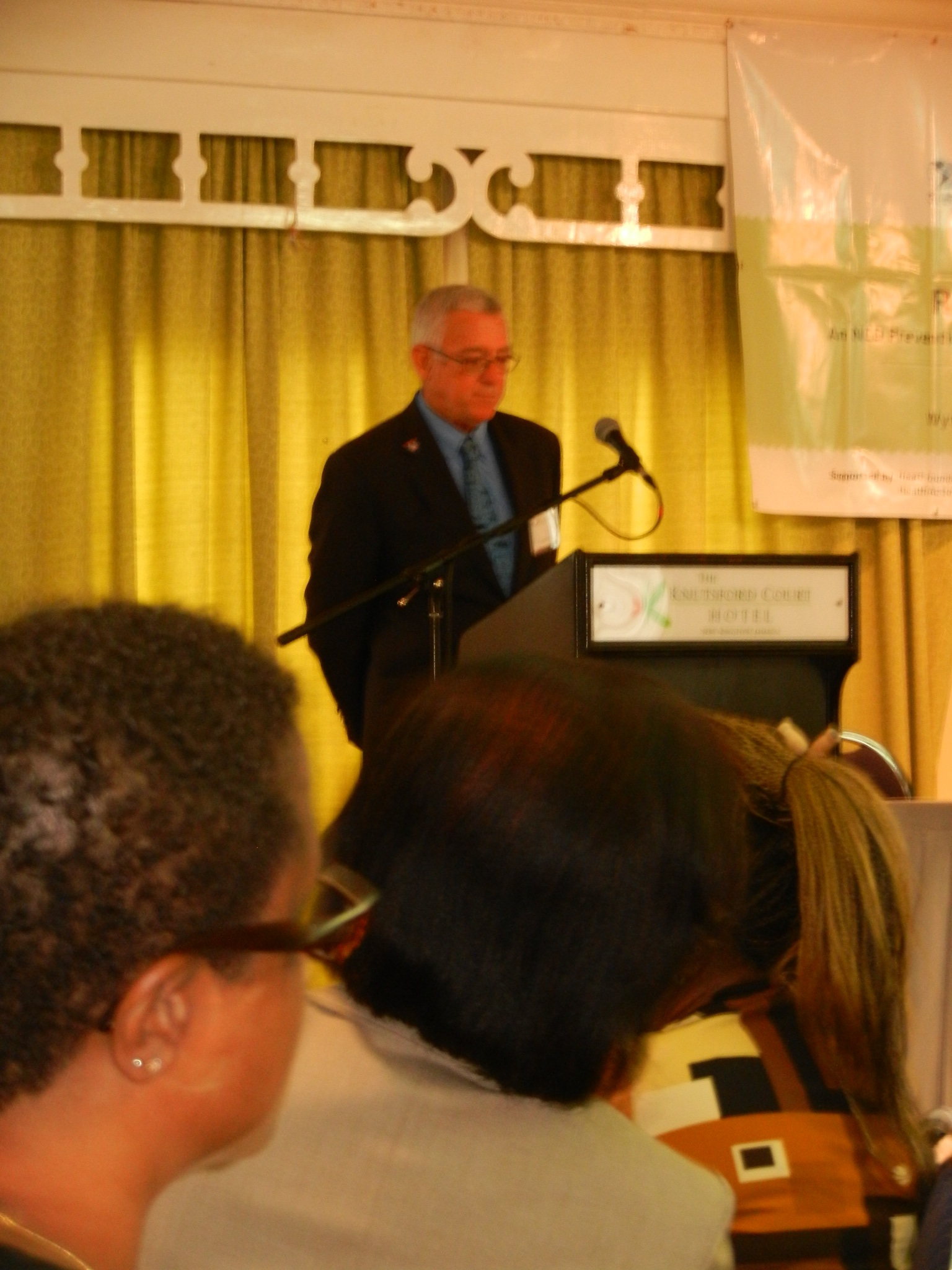
ImageOf special note in attendance was Jamaican Minister of Education, the Honourable Ronald Thwaites who set the tone of the event early, declaring his Ministry’s full commitment to partner with the HCC. He spoke about the “bulla and bag juice’ culture in school feeding in Jamaica and it probable impacts on a child’s poor educational and health outcomes. He stated his intention to address these and other issues this and requested support from the Coalition for the development of the education curriculum which will include messages and activities to persuade students about the advantages of healthy living.

Sir George Alleyne, who, by the end of the workshop was declared Patron of the HCC, advocated for “the NCD approach” which is a “determined, sustained effort to address NCDs  subsuming sectoral and organizational hubris to a united collective focus on the task of prevention and control of NCDs in the Caribbean”.

Communications lessons coming from the Healthy Caribbean Coalition campaign:

The campaign of the HCC has been not only one the the best branded health campaigns of the region, but also innovative and participative.

The “Get the Message” campaign was a mobile phone text message campaign started by the Healthy Caribbean Coalition to raise awareness about NCDs and the UN High-level Meeting. Working with only volunteers, the campaign set out to get 1 million text messages in support for NCDs from people in 17 Caribbean countries. People simply had to text “yes” to a specific number and by partnering with mobile phone providers, there was no cost involved. The campaign ran television and radio PSAs, worked with local radio stations and concert venues, leveraged Facebook and Twitter, and staged two all day text-a-thons. Although the goal was to reach 1 million text messages, in reality, nothing like this has been done before. After five months, they have received over 460,000 text messages.Considered a success, the organizers offer key takeaway points for people wishing to engage in similar efforts:
1.  Any campaign should educate their audience in addition to asking them to engage – people cannot only ask their audience to “text, text, text” but instead ask them after teaching them about the issue.
2.  Also the campaign tailored its messaging to the individual needs of the 17 countries involved. Because a campaign like this is likely to involve NGOs, volunteers, and several for-profit companies, key stakeholders should be identified early on and their roles established. Although new, raising awareness about NCDs through the Get the Message campaign proved successful and hopefully reproducible in other parts of the world.

[adapted from Procor website)

In Part 2 of this post I will explore some topics relevant to health communications in the region which came out  of this meeting.

CARIMAC students’ #Dntxtndrive Campaign 2012

This slideshow requires JavaScript.

The Caribbean Institute of Media and Communication (CARIMAC) Social Marketing class 2012 this year for their final year project focused their energy on a campaign against texting and driving. Despite the lack of local empirical evidence to support the choice of the campaign, it was duly justified based on emerging evidence and policy regionally and worldwide. Trinidad and Tobago, for example has implemented a law against the use of cellular telephones while on the roads from as early as February 2011. The law states:

“No person shall drive or have charge of a motor vehicle on any road while holding or using a hand-held mobile device.”

and

“No person shall use a wireless communication device to view, send or compose an electronic message while driving or having charge of a vehicle.”

Breach of this regulation renders a person liable to a fine of $1,500 or three months imprisonment.

The campaign by the social marketing group therefore rightly claims to be proactive in calling attention to this issue in Jamaica. They launched a campaign aimed at heightening awareness and behaviour change (less texting and driving) targeted at students of the University of the West Indies (UWI). The campaign recently ended but there were a number of innovative ideas employed by the students in order to communicated their message.

1. The Chalkwalk

The students drew large images of their campaign logo and slogan #dntxtndrive using chalk. This was not only interesting for passers by after completion, but stimulated interaction with onlookers about the campaign message while the drawing took place.

2. The Walkabout

The students used a steering wheel to dramatically walk around the campus, bumping into people as they passed as a conversation starter about texting and driving.

3. The Flash Mob

A group of dancers partners partnered with the social marketing team to do a flashmob which would highlight the message to onlookers.

And there were other great activities as well including a window wash/wipe event in the university car park and a campaign song. I was impressed by the creativity and work put in by the class to attempt a successful campaign.

But, was the campaign successful? The evaluation suggested that there was only a 13% adaption of the behaviour (the target was 20%). The students have argued, however, that the campaign was implemented in less than 6 months and changing behaviour is a long term activity. Also, 13% is still a positive indicator (the campaign certainly did not cause the behaviour to change in a negative way).

This is a viable argument, however one cannot help but wonder if the students should have even tackled behaviour change to begin with, given the limited time for the campaign. Awareness raising and advocacy could have been a sufficient goal for the time frame. Also, there is the question of whether the University was the best place to target the campaign. How many UWI students drive and was the campaign targeted enough specifically at drivers on the campus?

On Monday, May 14 2012, the day after the evaluation presentation of the campaign by the students the Minister of Transport, Works and Housing, Hon. Dr. Omar Davies announced that persons who use mobile phones while driving will soon face fines, with the promulgation of new legislation by the end of 2012, which will make the practise illegal (view article). This cannot necessarily be directly attributed to the students’ campaign (unless Mr. Davies confirms :)) but it may have been influenced by the campaign. As such, a hearty congratulations to the students for raising awareness of this issue inside and outside of the walls of the University!

View the students’ presentation here.

Image

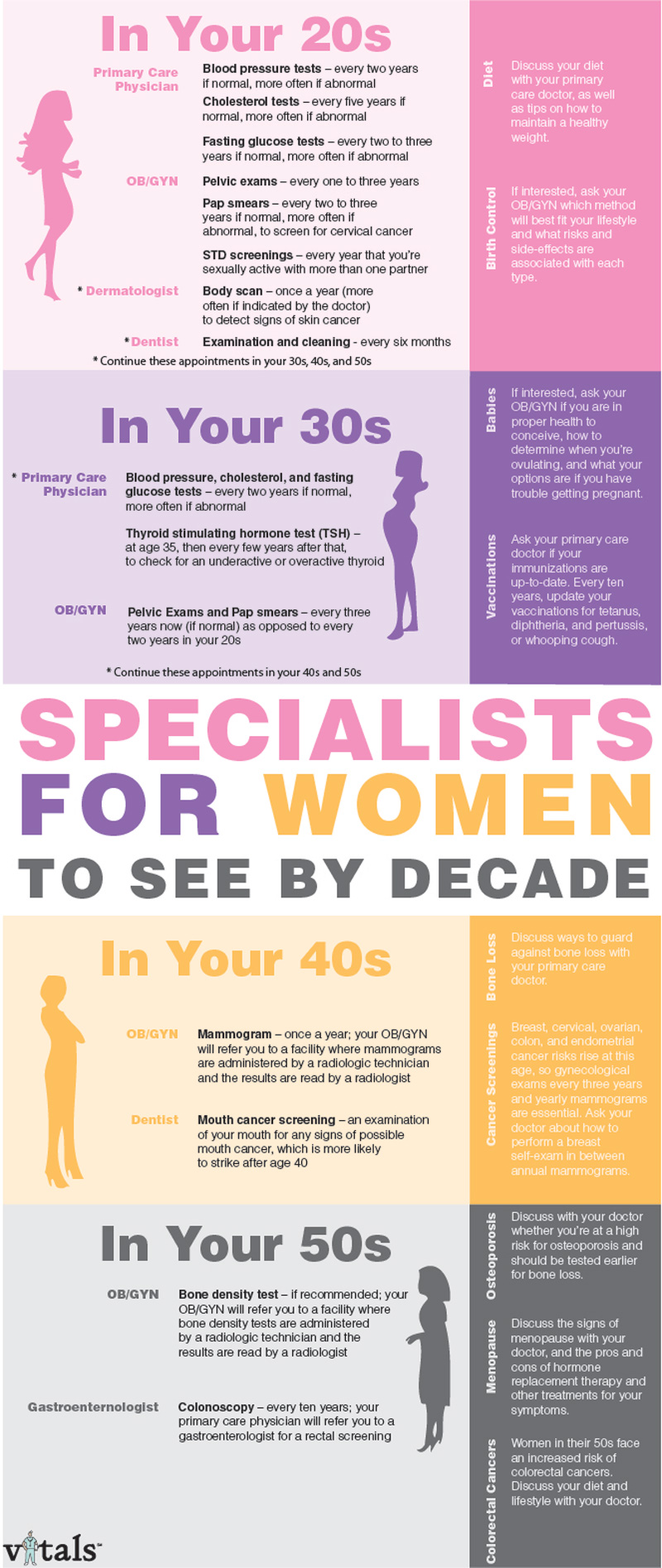
Specialists for women to see by decade-via Huffingtonpost.com

It’s Women’s Health Week in the United States and there’s a wealth of information around the web about what women can do for better health. The infographic below (From Huffingtonpost.com via Vitals.com) shows women in their 20’s through 50’s the various types of medical professionals they should visit and what tests need to be done. The posting of this graphic does not constitute medical advice, and everyone should talk with their general practitioner/primary care physician or other primary care medical personal regarding what to do at each stage of their lives. The importance of the information below is to encourage open communication between patients and physicians. For example, if you’re in your 20’s and sexually active, regular HIV and other STD testing should be part of your medical routine. Breast and Cervical cancer are leading causes of death among Caribbean women. Women in their 40’s should talk to their doctors about routine screenings. There is often a stigma associated with many of the tests shown in the graphic below. Speaking about these tests to your doctor and sharing information with family members is one step towards better health.


International Conference on Health in the African Diaspora

International Conference in Health in the African Diaspora (ICHAD 2012) brings together a broad spectrum researchers, policymakers, health and development advocates, and health journalists from across the globe. Conference participants will share critical knowledge about major health challenges confronting African descendants, including chronic disease, HIV/AIDS, maternal and child health, mental health, healthcare access and quality, and the social determinants of health. ICHAD 2012 will have nearly 30 speakers from a dozen disciplines focusing on 14 countries, including Belize, Brazil, Canada, Colombia, Jamaica, Panama, Peru, and the United States. The project will produce a book comprising conference papers and will be held July 4-8 in Baltimore, Maryland, USA.

(more…)