Quote

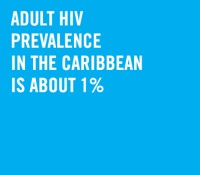
The Jamaican Observer reported today that the country is receiving PEPFAR funds to fight HIV/AIDS stigma. Stigma is one of the major barriers to decreasing HIV transmission across the region, and also greatly affects the lives of those living with and affected by HIV.

The report said that the funding will go to five organization, with the funding used to reach

youth in rural and urban communities, marginalised population and faith-based organisations through specific initiatives.

A major part of the stigma reduction program will include developing communication campaigns to inform and educate different populations about AIDS. It’s amazing that thirty years into the epidemic, there is still a lot of confusion about AIDS, and often, this breeds stigmatization. Some funds will also be used to educate women leaving prisons, a population who are often stigmatized for their status and that puts them at risk.

Do you have other example of health communication interventions targeted at at-risk populations in your community?

Study shows early HIV treatment could prevent transmission

Image courtesy unaids.org

An article published today in the New York Times reports that getting HIV infected individuals to treatment immediately after diagnoses, instead of waiting for a low CD4 count, greatly reduces the risk of transmission.

The study, lead by Dr. Myron Cohen at the University of North Carolina at Chapel Hill followed more than 1700 couple, and the early results from the study led an independent review panel to conclude that all participants should be given treatment.

This is definitely good news for those working to end the HIV epidemic. In the past few years, several campaigns have focused on testing and treating individuals as early as possible, including UNAIDS Test and Treat; the Know Your Status campaign targeting Black Americans and the various community-level interventions.

The article brought up a good point-about the doctor patient communication-regarding access to treatment. It reminded that despite the promise of the study, it is still up to doctors to decide with their patients when to begin treatment. Also mentioned were the various barriers to access to care. In the Caribbean region, like most of the world, those who need treatment are not always able to get it because of cost or other issues.

In what ways can health communication be used to advance the research presented in this study? How might one design an intervention targeted at doctors treating newly infected HIV patients? What type of health education intervention would you design to let people know that early treatment is an option after getting tested?

Is having simultaneous multiple sex partners a mental illness?

Is having simultaneous multiple sex partners a mental illness? One Jamaican psychiatrist certainly thinks so. Dr. Frederick Hickling, speaking at a mental health campaign launch at the Caribbean Institute of Media and Communication (CARIMAC), called this behavior a “pathology.” He continues saying, “I think that in this culture we are enticed by transgression and we condone transgressive behaviour. We more condone transgression than we condone normality. When somebody comes to you and asks for a ‘bly’ they are really saying ‘allow me to do something that is wrong instead of doing something for myself’. I think that is absolutely wrong and I think it is abnormal and I think it is a form of psychological denial about things that we know we ought not to be doing”.

Dr. Frederick also took to task the often-cited links between polygamy in Africa and Jamaican (and by extension Caribbean) men’s multiple sexual partnerships, noting that the African links are used as an excuse for transgressive behavior.

As evidence for his mental illness theory, Dr. Frederick also cited the numerous musical examples glorifying such behavior. Among the ones mentioned was Beenie Man’s “Nuff Gyal” below.

Reflecting on the music and on men having simultaneous multiple sex partners, Dr. Frederick also said this “reflects the kind of attitude we have in the Caribbean towards transgression. That’s a very male, chauvinistic position where the man believes he can do what he wants, and when he wants. This is neither a pandemic, nor is it soft. It is an epidemic and it is hard”. To be sure, he also said this behavior is not a male only phenomenon, but it is male dominated.

So, is this a mental illness? I need much more evidence before coming a solid conclusion as such. And considering that these statements were made at the launching of a mental health awareness campaign, Dr. Frederick made every attempt to include cultural, sociological and psychosocial explanations for considering this a mental illness. Nevertheless, before we call it a metal illness or jump to how such behavior is (re)presented in music, we should look at how males are socialized across the Caribbean region. From young, men are often asked to prove their maleness by being with women. We make it very difficult for a young man to choose to abstain from sex or to choose to be with one person. Oftentimes, our parents or other adults nearest and dearest to us were engaged in this behavior and although we are not told to ‘do this’, we are also often not told the opposite.

Although I am not convinced this is a mental illness, it is a societal ill. It is reflected in the many single-parent or grand-parent headed households across the region. It is reflected in the rising HIV and other STI cases, particularly among Caribbean women. It is reflected in rising violent crime committed by young men. It is reflected by the number teen pregnancies.

This is actually an important conversation to have. We should be talking more about mental health across the region. We should also be talking more about the impact of simultaneous multiple sex partners not only from a mental health standpoint, but also from a public health and sociological standpoint. I’m just not sure if the two belong in the same conversation in then vein of Dr. Frederick.

The full article is available at the Jamaica Observer website here

Caribbean Health News Roundup

Global:

2.6 Million Babies Stillborn Worldwide

 (VOA News) — The World Health Organization estimates some 2.6 million stillbirths occurred worldwide in 2009, the overwhelming majority in developing countries.  This first comprehensive set of estimates appears as part of a series of articles on stillbirths published in the British medical journal, The Lancet. 

Every day, the World Health Organization reports more than 7,200 babies are stillborn – ninety-eight percent of them occur in low and middle-income countries.  But, WHO notes, high-income countries are not immune, with one in 320 babies stillborn.  WHO says this rate has changed little in the past decade.

Read More: http://www.voanews.com/english/news/health/26-Million-Babies-Are-Stillborn-Worldwide-119832454.html

Regional:

Regional health ministers meet in Guyana this week

(Jamaica Observer) — Caribbean Community (Caricom) health ministers meet here later this week to discuss a number of issues, including three areas that regional leaders want included in a document for a high-level meeting of the United Nations on chronic non-communicable diseases in September.

 A Caricom Secretariat statement said that the April 15 -16 meeting will discuss the region’s continued fight against non-communicable diseases (NDCs) and review the progress made in implementing the 15-point Port-of-Spain Declaration, “Uniting to Stop Chronic Non-Communicable Diseases”.

Read more: http://www.jamaicaobserver.com/news/Regional-health-ministers-meet-in-Guyana-this-week_8662341#ixzz1JYUcLWiM

British Virgin Islands:

Chickenpox outbreak reported in British Virgin Islands

(Caribbean News Now) — The British Virgin Islands Ministry of Health and Social Development has reported that there has been a marked increase of the number of cases of chickenpox reported in the territory. Residents have been urged to seek information about the varicella zoster virus, commonly known as chickenpox, and how it can be prevented.

According to the Chief Medical Officer, Irad Potter, the Health Surveillance Unit received reports of 33 cases of chickenpox for the period March 5 to March 25.

Read More: http://www.caribbeannewsnow.com/headline-Chickenpox-outbreak-reported-in-British-Virgin-Islands-5980.html

Dominica:

Kalinago Council signs health MOU with government

(Dominica News Online) — The Kalinago Council has signed a Memorandum of Understanding (MOU) with government for the commencement of service at a medical facility in the Kalinago Territory.

Kalinago residents say they are concerned about the medical facility that was built several years ago but had remained vacant and unused.

Kalinago Chief Garnet Joseph said once the facility is operational, it will solve several problems faced in accessing health care in the community.

Read More: http://dominicanewsonline.com/dno/kalinago-council-signs-health-mou-with-government/

Opening of children’s home a landmark achievement – PM

(Dominica News Online) Prime Minister Skerrit said the official opening of CHANCES, a place for safety for children at risk, is a landmark achievement in government’s mission to eradicate poverty among the country’s children and youth.

The government of Dominica in collaboration with the United Kingdom-based Children’s Charity Action, today officially opened the $3.9 million facility at Chance in Jimmit.

Skerrit said, “the greatest of a nation is to be judged, not by the number of millionaires it generates, important as it is, but by the care it provides to vulnerable, disadvantaged and abused citizens”.

Read More: http://dominicanewsonline.com/dno/opening-of-childrens-home-a-landmark-achievement-pm/

Haiti:

Dubai Cares’ on-going primary education programs in Haiti reaching over 200,000 beneficiaries

(WAM) — Apart from developing and funding a number of primary education programs in developing countries, Dubai Cares is currently conducting follow-up visits to beneficiary countries to monitor and evaluate first-hand the progress of all its programs.

Spread across 24 countries worldwide, the UAE-based philanthropic organization’s primary education programs represent its contribution to UN Millennium Development Goal 2 of achieving universal primary education.

Read More: http://wam.org.ae/servlet/Satellite?c=WamLocEnews&cid=1289993070562&p=1135099400295&pagename=WAM%2FWamLocEnews%2FW-T-LEN-FullNews

Jamaica:

Bright Smiles For Dental Chairs

(Jamaica Gleaner) –The drive to promote improved public oral health care got a major boost on Tuesday with the donation of 25 state-of-the-art dental chairs with a combined value of US$135,375 (J$12 million) to the Ministry of Health by Food For The Poor.

There is a serious need for equipment and supplies for the public dental programme coordinated by Government, and critical among these are dental chairs, without which practitioners cannot properly examine patients. For this reason, Health Minister Rudyard Spencer described the donation as timely, in light of the Government’s commitment to place more focus on dental health service for the upcoming financial year.

Read More: http://jamaica-gleaner.com/gleaner/20110413/lead/lead7.html

Trinidad:

US Air Force medics serve locals

(Trinidad Guardian) — Dental services was in high demand at the $12 million public health clinic set up at the Cumuto Defence Force Barracks to serve residents and environs of the rural community. The two-day joint venture—in collaboration with the Ministry of Health and the United States Air Force—attracted both young and old eagerly awaiting the free medical services being offered. In true army style, medical services are being conducted under five large tents, which includes an intensive care and paediatric unit, operating theatre and dental clinic. Commander of the US Expedition Medical Support Hospital Scott Russi said the aim of the clinic was to provide consultation and primary health care service to nationals.

Read More: http://www.guardian.co.tt/news/2011/04/10/us-air-force-medics-serve-locals

CHRC conference begins today in Guyana

The 56th Annual Caribbean Health Research Council Conference begins today in Guyana. This three-day conference-the largest health research conference in the English-speaking Caribbean-brings together researchers, policy makers and healthcare providers to address the pressing needs of the region.

Guessing by last year’s conference-with panels on chronic diseases, health services, HIV/AIDS/STIs, nutrition, communicable diseases and other topics-this year promises to be delve into a range of public health and healthcare concerns of many Caribbean countries.

According to the tentative program released by CHRC, presentations include :

  • “Fear of HIV/AIDS and perception of personal risk: Examining the impact on stigma towards PLHIV and intention to be HIV tested” by RP Yearwood
  • “The role of parenting education and training in increasing parenting competence: A Grenada study” by L Glasgow, S Felix, K Cyrus, S Thomas
  • “Acculturation of African and Indian‐Caribbean women shifts the age of onset of breast cancer away from indigenous populations towards urbanized countries: evidence for lifestyle effects” by  A Ahamad, G Legall, V Roach
  • “Cricket World Cup: A stress test for the surveillance system in the Caribbean” by E Boisson, M Imana, P Roberts

The full program is available here.