Quote

Image courtesy: http://fandom4saa.wordpress.com/An article in the UK’s Daily Mail is reporting on the alleged rape and attack of two British Charity workers on St. Lucia. This news also comes on the heels of investigations into reports of rapes and sexual assault from U.S. Peace Corps volunteers. When incidents such as these happen, countries are quick to protect their political and financial interest. Often, one of the first questions asked is ‘how will this affect tourism in the short term and in the long run?’

However, more questions needs to be asked of the culture in which women–whether nationals or foreigners–are victims of rape and sexual assault. And, we need to focus more on understanding why young men commit such crimes. Over the years, I’ve seen a rise in wanting to blame ‘society’ and ‘media’ without really knowing what implications these terms have on male socialization. Much have been written about hyper-sexualization of Caribbean men.

Our region has among the highest rates of sexual assault in the region. I’m sure any reported number is lower than actual happenings simply because many of these incidents go unreported. According to a Kaieteur News Online article on a UNIFEM report released last year,

“Sexual violence against women is high across the Caribbean, with all CARICOM countries showing higher than the global average per capita rates. This is according to United Nation Development Fund for Women (UNIFEM).”UNIFEM disclosed that crisis centres report significant under-reporting of all forms of sexual violence as victims lack confidence in the administration of justice. “Women victims did not expect police sympathy and would only report with great reluctance.””

What is the best way to go about gathering data on the determinants on rape and sexual assault across the region? Considering that many cases are not reported, what can be done to inform and educate women-and men-about the impact of such abuses on the individual, family and community lives as well as on the population level? What types of interventions (structural?) might be implemented to decrease the prevalence and incidence of sexual assault and rape in our society?

Sir Viv and Johnnie Walker team up on "Be a Giant: Don't Drink & Drive" campaign

Mixing alcohol with driving is one of the many growing public health problems across the Caribbean. Recently, cricket legend Sir Vivian Richards teamed with Diageo’s Johnnie Walker brand on their “Be a Giant: Don’t Drink and Drive” campaign. As reported in the Jamaica Observer, the campaign encourages Jamaicans and others to be a giant by not getting on the road. The message is that in having a responsible, non-drinking driver take charge of the wheel, all are being giants. Sports and alcohol may be strange bedfellows, but for cricket fans who enjoy the ‘party stand’ and VIP areas with unlimited alcohol, Sir Viv is a formidable face to have on this campaign.

A major component of the campaign is the Facebook pledge to not drink and drive. By liking the campaign on the social networking site, participants will join Sir Viv in committing to drinking responsibly. Although there was no mention in the article of how many people the campaign expected to reach, so far, almost 50 people have ‘liked’ the campaign, and presumably signed the pledge.

Have you heard of this campaign? Did you sign the pledge? Are you encouraging others to sign the pledge? If so, what type of communication are you using to spread the word? Does having to go to facebook to take the pledge factor in any way in your decision to engage with the campaign?

Quote

A new study in the journal Brain, Behavior & Immunity found that less educated persons age faster than other groups. The study was reported on at BBC Health.

This study continues the well-established area of research addressing social inequalities and health. However, it also sheds light on just which areas greatly affects health outcomes. The findings suggest that low education attainment may indicate long-term social economic status and a shortened lifespan.

“Education may also promote problem-solving skills leading to reduced biological stress responsivity, with favorable consequences for biological aging.”

The research, conducted by University College Professor Andrew Steptoe, included 448 men and women between the ages of 53 and 75, was collected from the Whitehall II epidemiological cohort, and included demographic, socioeconomic and biomedical markers. No mention was made of how/if race or ethnicity, combined with low education attainment, have an impact on aging.

How can the findings of this research be applied to the Caribbean region? What types of interventions could be designed to address these structural issues? What role does communication play in the design of these interventions? And in addressing these issues?

Quote

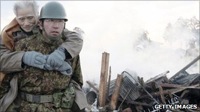
BBC Health is reporting that several Japanese doctors wrote to the Lancet, telling of how they used social media sites such as Twitter to communicate with their patients during and after the earthquake.

“Forming a supply chain for such drugs in the earliest stages of the disaster was difficult; however we found that social networking services could have a useful role.”

Social media is becoming an important communication element before and after disasters. Communicators are using the tools to alert public about approaching disasters, and then using those tools to get assistant to survivors. For the Japanese doctors, the goal was not to treat emergency cases, since hospitals tended to patients with urgent needs. Instead, they needed to get medicines to those with chronic diseases such as diabetes, hypertension and the like.

Since the Caribbean is prone to hurricanes and other natural disasters, are our telecommunications infrastructure reliable enough to operate in their aftermath? Are enough of our citizens engages in social media, such that in case of emergencies, officials are able to communicate with them? Do those who respond to natural disasters–healthcare workers, law enforcement etc–know what communication sites their publics are using?

It may seem arbitrary to want to know where your citizens congregate online. But that knowledge proves invaluable in natural or unnatural disasters.