
My heart and prayers go out to the people of St. Lucia as they mourn the death of more than 17 people in a bus crash. The Prime Minister has declared a three-day mourning across the islands. This is a terrible tragedy. But is also reminds us that road safety is just as important as any other. Unintentional accidents cause many injuries and deaths across our beautiful islands. Those of us from islands with hills and mountains know the dangers of driving with the mountain on one side and the sea on the other. Continue to pray for the families affected.
Category: In the News
Limited Competition: Fogarty International Research Collaboration – Behavioral and Social Sciences (FIRCA-BSS) Research Award (R03)
This Funding Opportunity Announcement facilitates collaborative behavioral and social sciences research between scientists supported by the National Institutes of Health (NIH) In the United States and investigators in low- and middle-income countries (LMICs). Special consideration will be given to proposed research that addresses significant global health problems, particularly those of high relevance to a LMIC or region, and that includes research capacity building as a major aim of the proposed project.
This is an excellent opportunity for collaborations between Caribbean-based and U.S.-based researchers.
The full details can be found here: http://grants.nih.gov/grants/guide/pa-files/PAR-11-036.html
CBMP evaluating LIVE UP campaigns
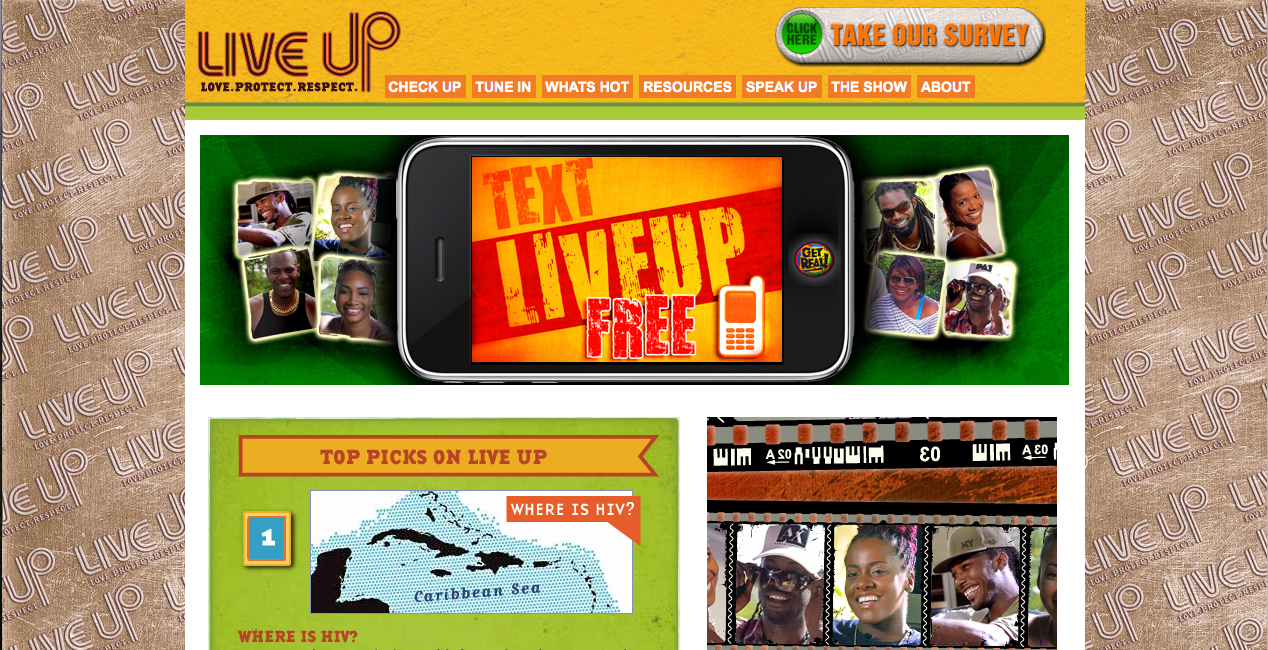
I’ve always been impressed by the work of the Caribbean Broadcast Media Partnership (CBMP) on HIV/AIDS primarily because strongly believe in the power of the media to get prosocial messages across. And, as with any campaign, it’s important to know what works and what doesn’t. Monitoring and Evaluation is just as important as Design and Implementation.
A few weeks ago, I received an e-mail from the folks at CBMP asking me to take a survey about their campaigns. Now, I have to admit the e-mail looked a little shoddy because it did not have the excellent graphics that I’ve come to associate with the organization. To be honest, it was just a few lines of text and nothing else. However, I can say that the survey is real and here’s what it said:
“For the past 5 years, the CBMP has rolled out 4 creative campaigns yielding over 53 TV and 43 radio PSAs as they aimed to share HIV information, reduce stigma and ultimately change behavior now they want to know – Did it work? In the coming weeks, with support from UNICEF, CBMP has contracted CARIMAC to conduct audience surveys to get feedback on the LIVE UP campaigns. You too can be a part of this exciting exercise. You just have to visit http://www.iliveup.com and click on the survey button to give us your feedback on LIVE UP!”
The survey is conducted in collaboration with the Caribbean Institute for Media and Communications (CARIMAC), another institution that I admire for their strong work on social and behavior change communication across the region. The aim is “to know what messages you have seen and remember, and what you think Caribbean people have understood from the campaign.”
To access the survey, go to http://www.iliveup.com/ and click on “Take Our Survey” in the upper right hand corner.
Web-based MSM survey going on now
This news comes by way of PANCAP.
“The first of its kind in the Caribbean, CARIMIS: Caribbean Men Internet Survey 2011 is happening all over the Caribbean. It is the largest ever Caribbean survey of gay men, transgender, bisexual men and other men who are attracted to men. It is an initiative of the UNAIDS Caribbean Regional Support Team.
“It asks about relationships, sex life, risks and precautions and use of health services. One of the goals is to see whether gay men and other men who have sex with men (MSM) have access to HIV testing and prevention.
In the Caribbean, HIV prevalence among the MSM population ranges from 6.7 percent in Suriname to 32 percent in Jamaica. This is compared to an estimated adult prevalence in the region of one percent. The need to respond meaningfully to the MSM community in the Caribbean is obvious and urgent yet little is known about this key population.
“With this in mind, the CARIMIS seeks to collect information about the lives of MSM throughout the English, French, Spanish and Dutch-speaking Caribbean over a three month period starting from October 2011. The internet based survey is anonymous and the questionnaire takes about 20 minutes to complete. It aims to assess behavioural risks among Caribbean MSM while reaching populations who are inaccessible through more traditional sampling methods.
“CARIMIS offers a new approach to collecting Caribbean-wide but country-specific HIV behavioural risk data that may complement current traditional national and regional MSM studies. This will enable UNAIDS as well as our HIV collaborating partners to better estimate the magnitude of the HIV epidemic among Caribbean MSM,” said research associate, Sylette Henry-Buckmire.
“It is expected that the internet interface will attract more honest responses and therefore offer a better understanding of HIV infection dynamics within the Caribbean MSM community. Also successful implementation of this web-based MSM survey will inform similar studies for other highly stigmatized groups such as commercial sex workers.”
For further information on CARIMIS please contact Dr. Michel de Groulard at degroulardm@unaids.org
Caricom developing risk communication alert system for non-food, non-pharma goods
One of the growing areas of within the spectrum of health communication is risk communication. The World Health Organization defines risk communication as “an interactive process of exchange of information and opinion on risk among risk assessors, risk managers, and other interested parties. Risk communication is an integral and ongoing part of the risk analysis exercise, and ideally all stakeholder groups should be involved from the start.”
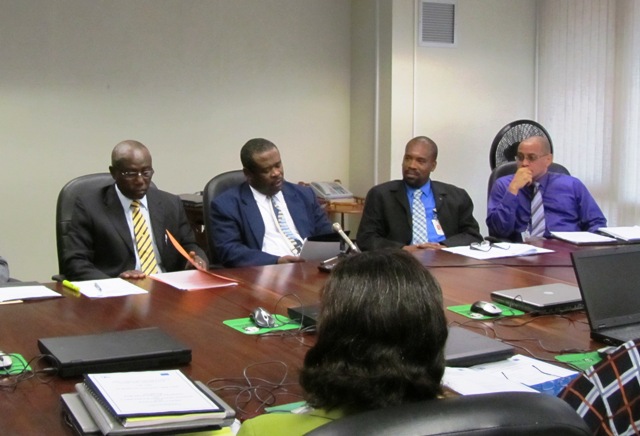
This past week, Caricom officials took another step towards effective communication when they came together for a seminar aimed at developing a Rapid Alert System for Dangerous Consumer Goods within the region. According the the Secretariat,
“[t]he training is part of a consultancy which focuses on the development of a comprehensive framework, including a computer based platform for the administration of a regional information exchange and response system. It is aimed at strengthening Member States’ market surveillance capabilities in the respect of non-food, non pharmaceuticals which pose a serious risk to consumers’ health and safety.”
I am very interested in seeing how this develops. My hope is that they employ the full range of mediated channels within this process. People across the region engage extensively with text messaging, and young people are very active on social networking sites. In most, if not all Caricom countries, traditional media such radio and television are the main sources to receive health and risk information. But, as more people move away from such channels, we need to consider the places they shift to.
Interestingly, I did not see or hear any discussions of the role of the newly formed regional public health agency. I saw mention of the CSME Unit. If anyone knows how (or if) CARPHA is involved, it would be nice to know.
 Caribbean Health Communication Blog