Quote

On the periphery of the IAS 2011 conference which took place in Rome from 17-20 July 2011, UNAIDS in collaboration with the Global Coalition on Women and AIDS (GCWA), ATHENA, Salamander Trust, WECARe+ and Network Persone Seropositive convened a town hall dialogue to discuss how the HIV response facilitates the achievement of sexual and reproductive health and rights for all women, including women living with HIV, at every stage of their lives.

For women living with HIV stigma and discrimination and gender-based violence acutely affect their access to comprehensive services and human rights. Within health services, they often face a lack of choice with regard to family planning; disapproval from service providers with regard to meeting sexuality and fertility desires; and violation of their sexual and reproductive rights in the form of coerced or forced abortion or sterilization. Participants agreed that advancing the health and rights of women in all their diversity is fundamental to the success of the HIV response, just as the HIV response is a critical avenue for achieving sexual and reproductive health and rights for women.

The event was also used as a platform to launch a report Community Innovation: Achieving sexual and reproductive health and rights for women and girls through the HIV response. Compiled by UNAIDS and the ATHENA Network, it presents case studies pioneering community undertakings to advance women’s sexual and reproductive health and rights through the HIV response and vice-versa, from different community perspectives. This report recognizes that women face unique challenges to access and fulfil their sexual and reproductive health and rights, including gender-based violence, and therefore have less access to HIV prevention, care and support services.

“Women and girls at every level and throughout different stages of their lives must be supported to demand quality services that meet their needs and those of their community,” said UNAIDS Deputy Executive Director, Programme, Dr Paul De Lay.

Learning from these community case studies is an opportunity to enhance the AIDS response, in light of the Millennium Development Goals and the 2011 Political Declaration on HIV/AIDS. The case studies indicate that for responses to be effective they must include the empowerment and inclusion of women in all their diversity, dedicate attention to sexual and reproductive health, including improvements in maternal and child health, and address the socio-cultural practices underlying gender inequality.

UNAIDS Getting to zero: strategy 2011-2015 also places gender equality and human rights as one of three core pillars. This report is part of that commitment to ensuring that women and girls’ rights are met through the HIV response and it was undertaken in the context of the UNAIDS Agenda for accelerated country action for women, girls, gender equality and HIV.

“UNAIDS continues to be a strong advocate for women’s health and rights, as well as to strongly stand against stigma and discrimination amongst all marginalized groups. We will continue to do so until we have achieved the vision of zero discrimination,” said Dr De Lay.

The full article is at http://www.unaids.org/en/resources/presscentre/featurestories/2011/july/20110719womenias/
Quote

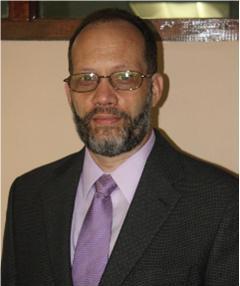
He is the current Assistant Secretary-General for Trade and Economic Integration at the CARICOM Secretariat, having served in that post since September 2005, a release from the Secretariat said. He replaces Sir Edwin Carrington of Trinidad and Tobago.

Secretary-General-designate LaRocque, 56, in his reaction expressed his deep appreciation for the confidence reposed in him by the Heads of Government.

“I am humbled and privileged for this opportunity to continue my service to the Governments and people of the Caribbean Community. As we strive towards the goal of a Community For All, the confidence of the Heads of Government, the support of the people of the Community and the committed staff of the CARICOM Secretariat are vital in achieving that objective.”

During his tenure, he will oversee the continued push for a comprehensive regional public health agency and will guide Caricom countries into implementing better health policies for their citizens and other residents of the countries.

Source: http://www.caricom.org/jsp/pressreleases/press_releases_2011/pres289_11.jsp

Quote

By Michel Sidibé, Executive Director of the Joint United Nations Programme on HIV/AIDS (UNAIDS) and Under Secretary-General of the United Nations

IAS 2011 offers a wonderful opportunity for the scientific community to share information and give the world the tools to reach our shared vision of Zero New HIV Infections, Zero Discrimination, and Zero AIDS-Related Deaths. These tools are not so far from our reach. Committed scientists, researchers and clinicians are achieving game-changing results that are revolutionizing HIV prevention, as well as HIV care and treatment. The old dichotomies between prevention and treatment no longer exist, as the science to support each is increasingly converging. We can expect further decreases in HIV stigma and discrimination as passionate advocates and activists, and in particular, people living with HIV, raise their voices and take charge of their health.
The scientific community has provided us with true breakthroughs this past year. Results from clinical trials have vastly widened our prevention tool-box, including oral pre-exposure prophylaxis and vaginal microbicides that reduce the risk of HIV transmission. Most recently, the extraordinary results of HPTN052, in which antiretrovirals used by people living with HIV dramatically reduced the risk of HIV transmission to their HIV-negative partners, give us further hope that we will continue to see reductions in the number of new HIV infections. The Joint United Nations Programme on HIV/AIDS (UNAIDS) will be working closely with scientific and community partners to understand how the results from this groundbreaking study can most effectively be implemented, and to advocate for this implementation, while at the same time ensuring that the rights of people living with HIV are protected.

Already last year, UNAIDS, WHO and other global and local partners, were exploring ways of effectively expanding access to antiretroviral treatment and launched the Treatment 2.0 initiative. Treatment 2.0 is a radically simplified treatment platform that will also produce benefits in preventing HIV transmission. The five pillars of Treatment 2.0:– optimized drug regimens, point of care and other simplified lab technologies, cost reductions, service delivery modifications and community mobilization – have work streams that are robustly reflected in the evidence-based accomplishments that will be reported at this conference.

The full posting is available at IAS 2011 http://blog.ias2011.org/post/2011/07/17/The-Path-to-a-World-without-HIV.aspx

Quote

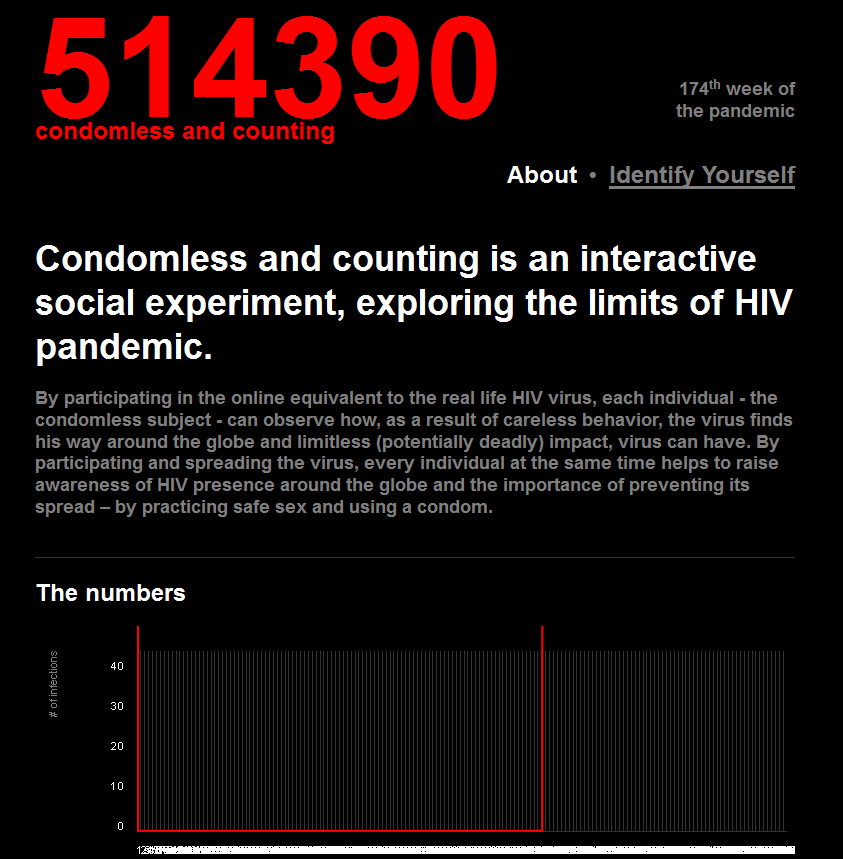
I came across what seemed like a really cool site this morning and wanted to share it with you. condomlessandcounting.com aims to show how fast the HIV network could potentially spread through your social network. After obtaining your own link, you the send it out to your network. As people click on the link they are ‘infected’. You see a graphical representation of the rate and reach of the virus. Sounds cool right? Is only I could get a link. After going to the website, I clicked on “identify yourself” and tried entering my ID to “see the damage”.

Except, I could not figure out what code the user is suppose to input. Maybe this only works if you’ve been infected. Meaning, I can only get a code after someone sends me a link. In any case, this is a good start to something that can be built upon. I am a proponent to helping people understand and visualize how diseases move through the community.

I should add that I do have an issue with language on the site. Many people who contact HIV are not engaging in “careless behavior”. This trivializes the very real issues on why certain people contract HIV. Studies have shown that even those with low risk behavior may be at higher risk for contracting HIV because of the dynamics of their sexual network and sexual behavior pattern.

Nevertheless, does anyone know how I can get a code? I would like to see this in action.

Quote

“WHEN presented with the question, ‘what would you do if you find out that your spouse or child’s father has molested your child?’, many mothers’ instinctive response is ‘I would kill him!’ — instinctive because a protective mother hen can’t fathom the loss of her child’s innocence in that brutish way. But in reality, and when faced with the actual situation, this promise is rarely acted out. In fact, some mothers live in silent denial, others resent the child, some choose to blame the child, and depending on the age, the mother may even put the child out of the household. Still others will simply accept it.”

“She told me not to tell anyone and that she felt it was her fault because she did not get up when he was doing it, even though she told him to stop and turned away. That broke my heart. Here she was, struggling with the guilt and not talking to anyone about it.”

“Daddy touch me there”  from the Jamaican Observer is one of the best and most powerful articles I’ve read from across the region addressing child sexual abuse, particularly by a parent or someone in a parent role. More information is needed-more interventions-to encourage children to speak up about being abused. We need to let our children know that it’s safe to speak up, and that doing so is best for everyone. My main critique of the article is that the abuse survivors were mainly females. As much as there is stigma about child sexual abuse among out islands, there is much more concerning the abuse of young boys. Let’s encourage more reporters to focus on this area and to write the stories of young people–male or female–who oftentimes lack a voice.

The full article is available at : http://www.jamaicaobserver.com/magazines/allwoman/Daddy-touched-me-there_9046634#ixzz1RNagXKL8