Dominica has lowest obesity rates but high mortality from hypertension and diabetes

One of the top news stories out of Dominica in the past week is that the island has the lowest obesity rates in the region. The report was written after a (epidemiological) survey from several islands, including St. Kitts, Barbados and the British Virgin Islands. Despite not having the highest rates, 9 percent of males and 33 percent of females on Dominica are obese, according to epidemiologist Dr. Paul Ricketts.

Today, Dr. Ricketts revealed that diabetes and hypertension are among the top ten leading causes of death among Dominicans.

“This is very significant for us and if we look at it by gender, you can see that again that diabetes and hypertension are in the top five causes of death whether you are a male or female, perhaps more so significant for females. If we look at the last five years that we have data for, when we aggregate this, you will see that diabetes, in fact, is a major player in terms of the underlined cause of death coming in at number two as well as hypertension. They’re both in the top five causes of death in our country.”

In light of today’s news, one should revisit the discussion on obesity rates, after all, obesity (and being overweight) is one of many risk factors for diabetes and hypertension. Therefore, having the lowest obesity rates was something to boast about only if other factors were/are ignored.

Yes, Dominicans like others in the western world (developed and developing) are getting fatter. This is something even Dr. Ricketts admitted. In light of these public health issues, the Ministry of Health developed a strategic action plan to address these and other public health issues.

I have done other posts of encouraging active living, reducing salt intake, and general CNCDs.

The full article on obesity can be seen here and on diabetes and hypertension here.

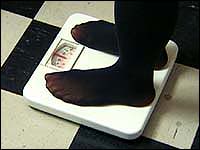
The image above can be found at http://hairoun.blogspot.com/2005_10_01_archive.html where the blogger discusses St. Vincent and the Grenadine’s obesity weight.

HCC’s Salt Reduction Campaign

I recently read an article on how the many observation days set aside for HIV awareness across the U.S. (this week was Native American HIV Awareness Day) may indeed dilute any comprehensive message on ending the epidemic. The various observation days this week made me think of that article. Between March 20th and 27th there are World Water Day, World TB Day and the entire week devoted to Salt Awareness. Now, the latter I had not heard off until visiting the Healthy Caribbean Coalition Website.

The focus on this year’s World Action on Salt and Health (WASH) is on Salt and Men’s health. Why men’s health? Because of a UK study noting that “more men prematurely die of cardiovascular disease (CVD) than women.  CVD accounts for 29% preventable deaths in men (compared to 21% in women).  The research shows that men eat more salt than women and on average have a higher blood pressure than women, particularly at a younger age, and are less likely to have their blood pressure measured, to take action to reduce it when it is raised or to take blood pressure lowering drugs.”

And, thus, HCC’s Salt Reduction Campaign.

As an aside, I’m interested in the evaluation of such a campaign. So, if there is someone working on evaluating this campaign or other health communication/health promotion campaigns in the region, please let me know by leaving a comment below.


Get The Message! Support HCC’s mission on CNCDs

Healthy Caribbean Coalition want people to “Get The Message” and help combat the rise on Chronic Non-Communicable Diseases across the region. Using social media and text messaging, the campaign aims to get  Caribbean citizens to contact their Heads of Government and encourage them to attend the upcoming UN High Level meeting on chronic diseases.

Participants can join the campaign on Facebook and Twitter.

This is an important fight for our region. In many countries CNCD are among the leading causes of mortality and morbidity.

More on the Coalition’s mission can be found at: http://www.healthycaribbean.org/hcc/index.html

UVI researchers to discuss public health challenges associated with climate change on WTJX

Courtesy: http://myhealthwhatsclimategottodowithit.com/

Part if my life’s mission is to strengthen the research component at the University of the Virgin Islands, my alma mater, so, I am always excited when I see updates on what professors and investigators are doing in improve the public’s health. About two years ago, the university received a NIMHD grant to study the links between climate change and public health challenges and to increase public awareness of said challenges. Through this effort, the lead researchers at UVI, Drs. LaVern Ragster and Gloria Callwood will, present a program “Climate & Health: New Challenges for the Virgin Islands” on Sunday, March 6 on WTJX.

Part of the project objective is to reduce health disparities in the Virgin Islands. According to the website:

“With a population that is 76 percent African American/African Caribbean and 14 percent Hispanic or Latino ethnicity, the Virgin Islands is recognized as an area with a “vulnerable population”, in which numerous health disparities exist. The project specifically aims to: (1) Research and develop information supporting communications and strategies to address links between climate change and increasing public health challenges, specifically dengue fever and ciguatera (fish poisoning), and (2) Develop an effective educational outreach program focused on the prevention and mitigation of health problems associated with dengue and ciguatera.

I hope anyone living within viewing range of WTJX will tune in to hear what the researchers have to say, encourage more pubic health research in the Virgin Islands and share their thoughts on best practices for communication health and climate information to the public.

To learn more about the project, visit their website at http://myhealthwhatsclimategottodowithit.com/

New study links HIV testing centers with Domestic Violence screening and counseling

Courtesy Duke Global Health

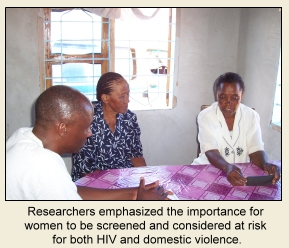
A new study from Duke University recently reported the recommendation of HIV intimate partner violence (IPV) screening at HIV voluntary counseling and testing centers (VTC). The study, conducted in Tanzania, interviewed more than 2400 women at the HIV VTC site, of which 20% reported physical or sexual violence during their lifetime. “Researchers found that domestic violence, defined in this study as intimate partner violence (IPV), was reported more often among women who are older, unemployed, less educated, married or divorced, and have children. Also, women with IPV were more likely to suspect HIV or infidelity in their sexual partner or have a sexual partner who has multiple partners.

This study has important implications for HIV and IPV interventions not just in Eastern and Southern Africa but also in the Caribbean region since there has been increased focus on DV, including child abuse, and IPV across the region.

In addition, studies such as this could also be conducted at DV centers to assess who within their population is most at risk for contracting HIV. I wanted to share this study because it reminded me of my own volunteer work in the Virgin Islands with a DV organization, and made me think of the various ways investigators could conduct studies within that population.

To read the full report on the Tanzania study, visit Duke Global Health website here.