Caricom developing risk communication alert system for non-food, non-pharma goods

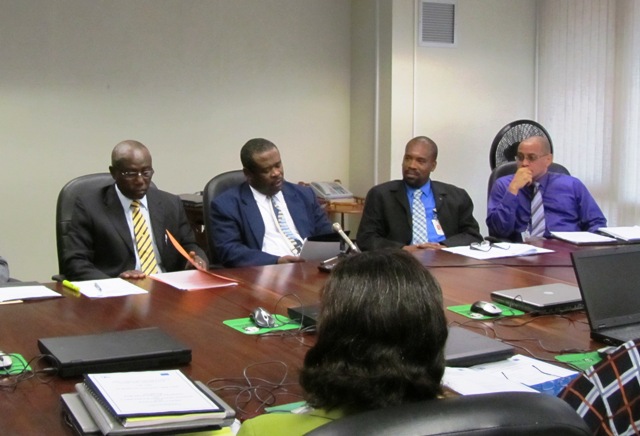
Seminar on developing a Rapid Alert System for Dangerous Consumer Goods within CARICOM, Barbados, 1 November 2011

One of the growing areas of within the spectrum of health communication is risk communication. The World Health Organization defines risk communication as “an interactive process of exchange of information and opinion on risk among risk assessors, risk managers, and other interested parties. Risk communication is an integral and ongoing part of the risk analysis exercise, and ideally all stakeholder groups should be involved from the start.”

This past week, Caricom officials took another step towards effective communication when they came together for a seminar aimed at developing a Rapid Alert System for Dangerous Consumer Goods within the region. According the the Secretariat,

“[t]he training is part of a consultancy which focuses on the development of a comprehensive framework, including a computer based platform for the administration of a regional information exchange and response system. It is aimed at strengthening Member States’ market surveillance capabilities in the respect of non-food, non pharmaceuticals which pose a serious risk to consumers’ health and safety.”

I am very interested in seeing how this develops. My hope is that they employ the full range of mediated channels within this process. People across the region engage extensively with text messaging, and young people are very active on social networking sites. In most, if not all Caricom countries, traditional media such radio and television are the main sources to receive health and risk information. But, as more people move away from such channels, we need to consider the places they shift to.

Interestingly, I did not see or hear any discussions of the role of the newly formed regional public health agency. I saw mention of the CSME Unit. If anyone knows how (or if) CARPHA is involved, it would be nice to know.
Who keeps children alive? Grandma!

That’s the findings from a review of 45 population studies from developing and developed countries conducted by researchers at London School of Economics and University College London.

For many of us who grew up n the Caribbean, it was not uncommon to be raised partly by our grandma, great-grandma, great aunt or another mother figure. These strong women help keep us not just alive but thriving in the absence (or presence) of our mothers and fathers.

The authors concluded that “the presence of at least one relative improves the survival rates of children if the mother dies, but that relatives differ in whether they are consistently beneficial to children or not. Maternal grandmothers improve child survival rates in the majority of studies, as do elder siblings, though the latter observation is based on rather few studies.”

According to the studies, fathers had little effect on child survival. This is not to say that fathers are any less important. The authors do call for more research on the role fathers actually play in children’s lives.

Reading this made me want to kiss my granny. Unfortunately, she’s too far away. But, I’ll send her a virtual one.

So, what role did your grandma (or another maternal figure) play in your life growing up?

The full article and access to the complete study is available from LSE’s website: http://www2.lse.ac.uk/researchAndExpertise/researchHighlights/socialPolicy/theresNooneQuiteLikeGrandma.aspx

Quote

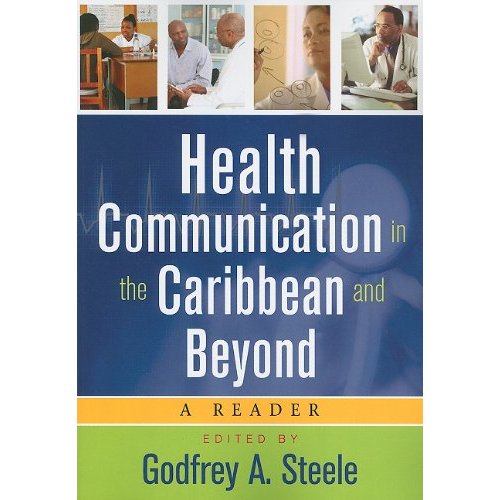
I’ve recently been trying to get more information on who’s doing what in health communication across the region. In the course of my diggings, I came across this book published this past summer. Health Communication in the Caribbean and Beyond: A Reader by Dr. Godfrey A. Steele is an excellent resource for introducing the concepts and applications.  The book is described as a “comprehensive, wellresearched and up-to-date discussion of the local and international health communication literature and provides a theoretical and practical framework for teaching health and/or medical communication skills. It reviews, explains and applies health communication concepts and principles, and provides contexts for their application in both the classroom and in the health professions.”

In an article in Trinidad’s Guardian newspaper about the book’s launch quoted Dr Brader Brathwaite, retired senior lecturer in the Faculty of Medical Sciences, as saying

“The reader is just a trailblazer in a number of books that must now be published in the area of health communication because one day we may come to accept health communication will be the key to better health for Caribbean people.”

I think this is one of the best quotes I’ve seen for increased attention to the role of health communication in health promotion and disease prevention. I like it so much, I am going to add it to the header for my blog. Yeah!!!.

To read the full article, go to: http://www.guardian.co.tt/node/18424

Quote

Here’s the agenda for the Global Health Council’s Communications working group meeting:

1:00    Welcome and Introductions
1:10    Get the Message – A Caribbean Text Message    Advocacy Campaign
Soren Nielsen, Communications Consultant,Get the Message Campaign
Lessons learned, challenges and results from an NCD-awareness campaign that led to 500,000 text messages across the Caribbean

1:50    New Media Working Group

2:05    Discussion: The Working Group moving forward

Global Health Council
1111 19th St NW, Suite 1120
Washington, DC

And to learn more about the campaign, visit https://caribbeanhealth.org/2011/03/25/get-the-message-support-healthy-caribbean-coalitions-mission-on-cncds/


Quote

“WHEN presented with the question, ‘what would you do if you find out that your spouse or child’s father has molested your child?’, many mothers’ instinctive response is ‘I would kill him!’ — instinctive because a protective mother hen can’t fathom the loss of her child’s innocence in that brutish way. But in reality, and when faced with the actual situation, this promise is rarely acted out. In fact, some mothers live in silent denial, others resent the child, some choose to blame the child, and depending on the age, the mother may even put the child out of the household. Still others will simply accept it.”

“She told me not to tell anyone and that she felt it was her fault because she did not get up when he was doing it, even though she told him to stop and turned away. That broke my heart. Here she was, struggling with the guilt and not talking to anyone about it.”

“Daddy touch me there”  from the Jamaican Observer is one of the best and most powerful articles I’ve read from across the region addressing child sexual abuse, particularly by a parent or someone in a parent role. More information is needed-more interventions-to encourage children to speak up about being abused. We need to let our children know that it’s safe to speak up, and that doing so is best for everyone. My main critique of the article is that the abuse survivors were mainly females. As much as there is stigma about child sexual abuse among out islands, there is much more concerning the abuse of young boys. Let’s encourage more reporters to focus on this area and to write the stories of young people–male or female–who oftentimes lack a voice.

The full article is available at : http://www.jamaicaobserver.com/magazines/allwoman/Daddy-touched-me-there_9046634#ixzz1RNagXKL8