Child trafficking in Haiti

News of children being bought and sold is heartbreaking because there are little to no protections for children or parents in these situations. Time and time, we hear of parents giving up their kids, hoping they’ll get a chance a at a better life. And, time and time again we read reports of how many Haitian children are sold like commodities, or put into the slave trade. Despite all the reports, it is upsetting to learn that Haiti has no law against trafficking on children. Let’s hope that while they rebuild structurally, the leaders of this great nation will consider building laws that so that their precious jewels will be saved from this ungodly future.

To read more on this story, visit the Haitian Professionals website as well as The Daily Telegraph’s article on children being sold for as little as one euro.

Making violence a public health issue in the region

I think it’s the the region starts approaching violence prevention as a public health issue, and not just a law enforcement or social justice one. In categorizing it as such, it affords the opportunity to define the problem beyond deviance and to seek the underlying issues facilitating such behavior. For indeed, many of these issues are behavioral in nature. Having lived in the Virgin Islands and experiences first-hand the effects of crime and violence on my family, I know there are serious causes affecting the crime rate and demonizing those involved in violence has not been getting us far.

I have also seen the rise in news stories from across the region on crime rates. Today, it is the Bahamas. Tomorrow, it will be another island discussing the rising crime rate. There are several recourses that local leaders can access if they want to reframe the problem. First, the WHO publication Violence – a public health problem, defines violence within the context of public health and offers ways to address the issue, saying, “The public health approach to any problem is interdisciplinary and science-based.” And, “The public health approach also emphasizes collective action.” One of the reasons I gravitated to public health was its focus on prevention and interventions. Within these areas, Caribbean communities can design multi-faceted, locally and culturally-relevant responses to violence. It begins with understanding your society and community and understanding the impact of violence on the health of people.

The Center’s for Disease Control also has excellent resources on various types of violence and public health approaches to violence prevention. Beyond violent crime, they address sexual violence, intimate partner violence, youth violence and more. Close to home, they can also draw on resources from PAHO Violence and Injury Prevention unit.

Haiti pulls out of CONCACAF u-17 after malaria outbreak

Haiti stopped its participation in the tournament, currently being held in Jamaica, after three players fell sick to malaria. “Yes, it is true, medical tests have confirmed that the players are suffering from malaria,” said Haiti’s coach, Wilner Etienne. This is definitely another blow for the country. We have seen many times how sports can lift the spirits of many a nations. I wish all the young players well and a full recovery. And, hope they get another chance to participate in the region-wide tournament.

This news is coming from the Jamaica Gleamer and sportsjamaica.com.

EPA to study air quality near HOVENSA on St. Croix

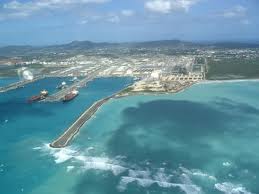
The U.S. Environmental Protection Agency has installed air monitoring equipment in three areas near HOVENSA oil refinery on St, Croix. This is in response to community concerns about the health impacts of chemical releases into the air.

Image courtesy of caribbeanbusinesspr.com

According to the full article, the study “will provide information to EPA and local residents on whether air quality near the monitoring locations poses health concerns and to guide the strategies for reducing local air pollution. EPA will use the information gathered in the study to help determine next steps, which could include additional monitoring or enforcement actions where appropriate. The goal is to protect public health by preventing exposure to pollution from the facility.”

The article goes on to say that “once monitoring is complete, the results from all of the locations will be analyzed to evaluate the potential for health concerns related to long-term exposure to these pollutants. The preliminary monitoring data is expected to be made public by late spring and a final report should be completed by the summer.”

The full article is available here http://www.caribbean360.com/index.php/news/us_virgin_islands_news/238984.html

Frustrated News Reader

I’m cross-posting this comment I made on the Dominica News Online website because it gets at my frustration with the entire news system:

As much as I enjoy visiting this DNO, I often get frustrated for what passes as news. When a minister makes statements such as this, including the other article on ‘buggery’, I implore DNO to give the people of Dominica as much information as possible and stop posting these simple ‘press releases’. For one, the Strategic Health Plan is available in 2 volumes, with one being the Situation Analysis touched on in the ‘buggery’ article. I was able to obtain electronic copies by simply sending an e-mail to the ministry of health after a previous ‘article’ on the subject. And this leads to my second point, it would help is DNO linked previous ‘articles’ to current ones to give an accurate picture of the situation. I wanted to see for myself what’s in the document because of my interest in public health. And thus my last point, DNO could either make the document available to the public to put aside questions of availability and so we can move the conversation forward to whether they can actually accomplish what’s been stated or give people ways to get the documents.