Who keeps children alive? Grandma!

That’s the findings from a review of 45 population studies from developing and developed countries conducted by researchers at London School of Economics and University College London.

For many of us who grew up n the Caribbean, it was not uncommon to be raised partly by our grandma, great-grandma, great aunt or another mother figure. These strong women help keep us not just alive but thriving in the absence (or presence) of our mothers and fathers.

The authors concluded that “the presence of at least one relative improves the survival rates of children if the mother dies, but that relatives differ in whether they are consistently beneficial to children or not. Maternal grandmothers improve child survival rates in the majority of studies, as do elder siblings, though the latter observation is based on rather few studies.”

According to the studies, fathers had little effect on child survival. This is not to say that fathers are any less important. The authors do call for more research on the role fathers actually play in children’s lives.

Reading this made me want to kiss my granny. Unfortunately, she’s too far away. But, I’ll send her a virtual one.

So, what role did your grandma (or another maternal figure) play in your life growing up?

The full article and access to the complete study is available from LSE’s website: http://www2.lse.ac.uk/researchAndExpertise/researchHighlights/socialPolicy/theresNooneQuiteLikeGrandma.aspx
Quote

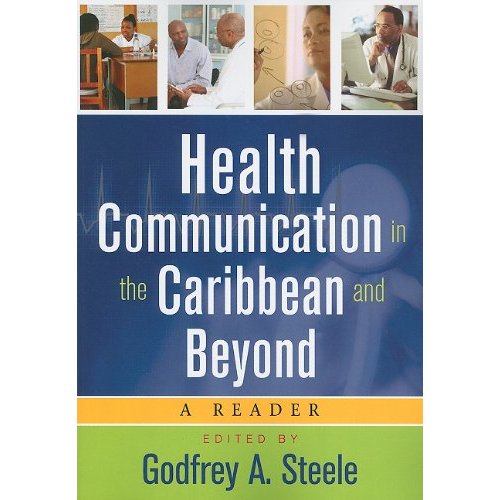
I’ve recently been trying to get more information on who’s doing what in health communication across the region. In the course of my diggings, I came across this book published this past summer. Health Communication in the Caribbean and Beyond: A Reader by Dr. Godfrey A. Steele is an excellent resource for introducing the concepts and applications.  The book is described as a “comprehensive, wellresearched and up-to-date discussion of the local and international health communication literature and provides a theoretical and practical framework for teaching health and/or medical communication skills. It reviews, explains and applies health communication concepts and principles, and provides contexts for their application in both the classroom and in the health professions.”

In an article in Trinidad’s Guardian newspaper about the book’s launch quoted Dr Brader Brathwaite, retired senior lecturer in the Faculty of Medical Sciences, as saying

“The reader is just a trailblazer in a number of books that must now be published in the area of health communication because one day we may come to accept health communication will be the key to better health for Caribbean people.”

I think this is one of the best quotes I’ve seen for increased attention to the role of health communication in health promotion and disease prevention. I like it so much, I am going to add it to the header for my blog. Yeah!!!.

To read the full article, go to: http://www.guardian.co.tt/node/18424

Quote

Hey,

If you’re in the Virgin Islands this week, check out UVI’s Fourth Annual Health Disparities Institute. The theme for this yeas is “Partnerships, Collaborations, and Models to
Reduce Health Disparities in the USVI and the Caribbean”.