Free on-line course on community behavior change

The course “Community Change in Public Health” taught by William Brieger of Johns Hopkins is offered through Coursera, an online site that provides free certificate courses in a range of topics.

About the Course

In bringing about behavior change in public health, we often focus on the individual mother, student, or farmer. We should not forget the community structure and norms constrain for encouraging individual health behaviors. This course examines the community context of the changes needed to promote the public’s health. We begin by examining the various definitions of ‘community’ and the processes by which we ‘diagnose’ or seek to understand the structure and characteristics of different types of communities. An appreciation of community similarities and differences is necessary lest we fall into the trap of designing one-size-fits-all interventions. We need to recognize that no matter that outsiders may view a community as poor or neglected, we can find strengths and capacities for improvement in each community. Identifying community capacities and resources is the first step in facilitating community change. Different practical and philosophical approaches to change and therefore, examined. Specific to the change process is our recognition of the need for communities to participate in the design, implementation and evaluation of any intervention. We examine the concept of participation in an effort to see how different levels of involvement may affect sustainability of community change efforts. Finally a case study of a community participatory approach to onchocerciasis control in Africa is presented. Community Directed Intervention has subsequently been successfully applied to providing other essential primary health care services by and in the community, such as insecticide treated bednets, malaria treatment, vitamin A distribution, deworming medicines, and pneumonia and diarrhea case management.

More information is at: https://www.coursera.org/course/communitychange
Journal of Health Communication Special Supplement Now Available

Special Issue: Meeting the Information Needs of Health Care Providers, Program Managers, and Policy Makers in Low- and Middle-Income Countries

This special issue has full text documents available at: http://www.tandfonline.com/toc/uhcm20/17/sup2

Topics included in the special issue include:

– Empowering people and organizations through information

– Working together to meet the Information needs of Health Care Providers, Program Managers, and Policy Makers in Low- Middle Income Countries

And other interesting articles.

This was a special supplement to the Journal of Health Communication by the Knowledge for Health (K4Health) project (/www.k4health.org). The subsequent blog post by Sarah Harlan from the K4Health team stated that:

“KM [knowledge management] is not just about disseminating information, but actually exploring peoples’ needs, then designing interventions to meet these needs. To date, however, there is not much evidence about specific information needs of different types of health professionals working in low and middle income settings. This supplement provides important results and suggestions that can be used to strengthen knowledge management systems. Beyond that, this research explores different levels of the health system, so we have specific recommendations for how these interventions can be implemented from the global level down to the community level.

We encourage others to review these results and consider the recommendations and implications of the findings as you design and implement your knowledge management programs.

We are offering indefinite open access to these articles, thus supporting free access to health information for health professionals worldwide. ”

There are many links between health communication and knowledge management (for public health) and this supplement provides a useful resource for those working in either field.

Want to know the best time to have kids? There’s an app for that

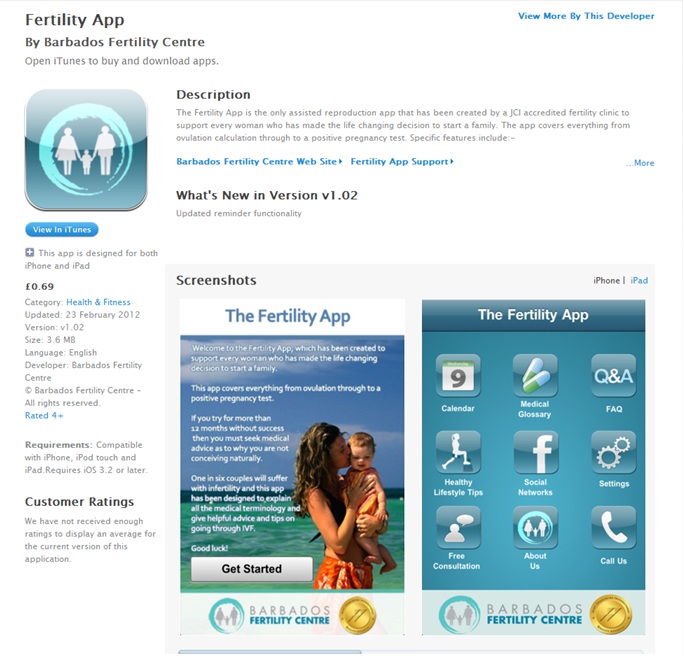
Family planning goes digital! The Fertility App has been developed by Barbados Fertility Centre (BFC), and is described as the first app of its kind produced by a health care provider. The app has an ovulation calculator, which is connected to the calendar. This then syncs with the user’s device to send them alerts and reminders. The user can add appointments and medications and there is a full medical glossary explaining all the medical terms associated with both male and female fertility. There is also a full description of preconception supplements and medications and their effects on the body when trying to conceive.

Veronica Montgomery, Marketing Manager at BFC said, “The app has been developed with every couple in mind who have made the life changing decision to start a family, we hope it will help couples conceive more easily and that they won’t need fertility treatment. However, the app covers everything about natural and assisted reproduction so that couple’s are aware of treatment options as well.”  The app is available through Apple’s App Store.
Would you use an app such as this? If you are a healthcare professional working with families trying to conceive, is this something you would suggest they use?

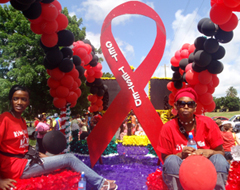
Regional, National HIV testing initiatives going on this week

Image courtesy Intrahealth

Like many people, the first time I took an HIV test, I was scared…

Many images start swirling through your head while you swab a stick around your mouth. In those 20 minutes it takes to get the results, you suddenly start to remember and reconstruct every possible incident that could possibly lead to an HIV positive diagnosis. And then the time is up…and you are called into a room and counseled on your results. Nervousness still ensues, even when you know you are not at high risk for contracting HIV.

Since that first time, I’ve taken the rapid oral HIV tests several times as well as the blood test. For me, it’s a good reminder to get this done along with other tests around the time of my birthday.

However, regional and national HIV testing initiatives vital in getting more people tested. All this week, countries around the Caribbean will be hosting various HIV testing events, leading up to the Regional HIV Testing Day on June 29th (sponsored by Caribbean Broadcast Media Partnership on HIV/AIDS, Scotiabank and the Pan Caribbean Partnership on HIV/AIDS (PANCAP)). Two days before that, on June 27th, the United States hosts their own National HIV Testing Day.  These initiatives aim to mobilize the general population and heighten public awareness of the importance of voluntary counseling and testing (VCT) as part of an effective HIV prevention strategy.

Here in the United States, we learn that Blacks are more likely than other groups to obtain a later HIV diagnoses. Additionally, Blacks, on average, are diagnosed with AIDS within one year of their HIV diagnosis. This suggests that people are not getting tested early enough to receive care. And, not knowing your status means that you are unknowingly passing on the virus to others. Studies have also shown that those who know their status are less likely to engage in risky sexual behaviors.

There is growing scientific data on HIV testing behaviors among various populations across the region such as HIV testing practices in Jamaica (Norman, 2006), Sexual behavior and attitude towards HIV testing among non-HIV testers in a developing nation: A public health concern (Bourne & Charles, 2010) and Prevalence and correlates of HIV testing among Caribbean youth (Andrews, 2011). But, as is often noted, effective and efficacious messages interventions need to be developed targeting youth, young adult and other underserved populations.

If you’re interested in knowing more about HIV testing, UNAIDS Caribbean published “Fast Facts About HIV Testing and Counselling“.

Across the Caribbean region, many places will be offering free HIV tests this week. You do not have to wait until the 29th to get tested. For a list of dates and location, visit http://www.digiscapes.net/cbmprtd2012.htm

Since this site aims to bring together initiatives not just important to those in the Caribbean but to Caribbean peoples outside the region, I’m interested in knowing if thier are similar initiatives in Cana or the UK that target either the national or Black/Caribbean populations. Let us know by leaving a comment below or emailing me at diane at caribbeanhealth dot org.


Live Stream of the University of Technology (Jamaica) 2nd International Public Health Conference

The livestream of the University of Technology, Jamaica Second International Public Health Conference  “Public Health Challenges: Impact on Jamaica, the Caribbean and the World: Are we prepared?” is available at the link below:

http://www.telegens.com/telemed/

Edited to add:

The programme for the event is available here:   Latest Conference Programme June 4 2012

The event is a public event. The cost for individuals starts at JA$2500 for 1 day; JA$3,500 for 2days and JA$5,500 for 3 days. Students and eligible public health professionals are discounted.