Old news, recurring theme: Caribbean Media Overlook Health Stories

This is an almost five-year-old story, but I felt compelled to share it since this directly correlates with one of the reasons I began this blog. Haven ranted here and written here about my frustrations with media organizations in the region, I am excited (well, in one sense yes and in another so sad) to see published data on just how much health stories are not being covered. The report, from PAHO and CARIMAC analyzed print and electronic press in St. Vincent and the Grenadines, and found that

“only 16 percent of stories had a health angle, although an additional 19 percent had the potential for a health focus. The study also found that stories covering HIV/AIDS issues more often than not utilized overtly negative terminology.”

Since this was to be a pilot study (found here), I am hoping to get additional published data on the original study as well as follow-up investigations from other countries. What were the results? Are there any similarities and/or differences in the coverage of health news across these islands? Which stories were covered most? Through what lens? Who was most likely to be interviewed? Whose voice is present? Whose voice is missing?

Apart from the implications of these studies for media organizations, I am also concerned about the implications for the health of the people served by such news organizations.Various studies show that populations gleam a great deal of health information from reading/listening or viewing media and entertainment programs, including from reading news reports. By excluding health information from the agenda, or by including it but only through limited lens, new organizations are failing at proving their audience with vital public health information.
UVI researchers to discuss public health challenges associated with climate change on WTJX

Courtesy: http://myhealthwhatsclimategottodowithit.com/

Part if my life’s mission is to strengthen the research component at the University of the Virgin Islands, my alma mater, so, I am always excited when I see updates on what professors and investigators are doing in improve the public’s health. About two years ago, the university received a NIMHD grant to study the links between climate change and public health challenges and to increase public awareness of said challenges. Through this effort, the lead researchers at UVI, Drs. LaVern Ragster and Gloria Callwood will, present a program “Climate & Health: New Challenges for the Virgin Islands” on Sunday, March 6 on WTJX.

Part of the project objective is to reduce health disparities in the Virgin Islands. According to the website:

“With a population that is 76 percent African American/African Caribbean and 14 percent Hispanic or Latino ethnicity, the Virgin Islands is recognized as an area with a “vulnerable population”, in which numerous health disparities exist. The project specifically aims to: (1) Research and develop information supporting communications and strategies to address links between climate change and increasing public health challenges, specifically dengue fever and ciguatera (fish poisoning), and (2) Develop an effective educational outreach program focused on the prevention and mitigation of health problems associated with dengue and ciguatera.

I hope anyone living within viewing range of WTJX will tune in to hear what the researchers have to say, encourage more pubic health research in the Virgin Islands and share their thoughts on best practices for communication health and climate information to the public.

To learn more about the project, visit their website at http://myhealthwhatsclimategottodowithit.com/

New study links HIV testing centers with Domestic Violence screening and counseling

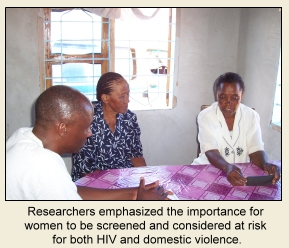
Courtesy Duke Global Health

A new study from Duke University recently reported the recommendation of HIV intimate partner violence (IPV) screening at HIV voluntary counseling and testing centers (VTC). The study, conducted in Tanzania, interviewed more than 2400 women at the HIV VTC site, of which 20% reported physical or sexual violence during their lifetime. “Researchers found that domestic violence, defined in this study as intimate partner violence (IPV), was reported more often among women who are older, unemployed, less educated, married or divorced, and have children. Also, women with IPV were more likely to suspect HIV or infidelity in their sexual partner or have a sexual partner who has multiple partners.

This study has important implications for HIV and IPV interventions not just in Eastern and Southern Africa but also in the Caribbean region since there has been increased focus on DV, including child abuse, and IPV across the region.

In addition, studies such as this could also be conducted at DV centers to assess who within their population is most at risk for contracting HIV. I wanted to share this study because it reminded me of my own volunteer work in the Virgin Islands with a DV organization, and made me think of the various ways investigators could conduct studies within that population.

To read the full report on the Tanzania study, visit Duke Global Health website here.

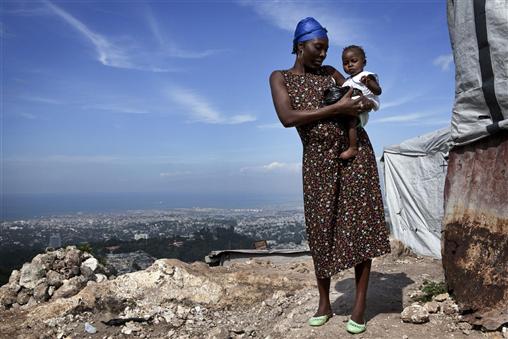
UNICEF – Photo of the Week – Haitian mother and child


From UNICEF’s Photo of the Week: Haiti, 2011: Miscillite holds her malnourished daughter, Jeanne-Baptiste, outside their makeshift shelter in Port-au-Prince. They live in a camp for people displaced by the January 2010 earthquake. Miscillite, who has four children and is pregnant, struggles to feed her family. Jeanne-Baptiste receives therapeutic food at a nearby UNICEF-supported community clinic.

UNICEF – UNICEF Photography – Photo of the Week.

Tell me more about your field…

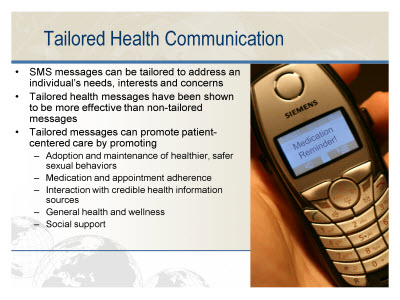
Image Courtesy AHRQ

A friend asked me tonight to give an overview of my field – public health. Of course, I could not do that. First, I am fairly new to public health, after working in marketing for two years and completing my master’s degree. Second, the field is way too broad and figuring out an entry point definitely depends on what you do within public health. And for me, this is health communication. So, I will share below part of the conversation we had, which is basically me trying to explain the role of social marketing and health communication within the wider public health agenda:

“I entered the field of public health through my education and experience in marketing and communication. I wanted to transfer my background to addressing social and public health issues. Health communication and social marketing is relatively new when compared to other public health areas. The American public health association included health communication within its auspices only within the last 20 years… and a document called “healthy people 2010″ developed in the early 1990′s to guide public health policies in the US included health communication on its agenda for the first time…With the release of healthy people 2020, the focus is now on getting Americans access to information in an equitable way as well as in access to accurate and timely health information

“A textbook definition for health communication is: The art and technique of informing, influencing, and motivating individual, institutional, and public audiences about important health issues. Similarly, social marketing applies the rules and principles of traditional marketing to achieve specific behavioral (or social) goals

“Essentially, many of what we do is an attempt to either change high risk behaviors (as in the case of HIV and STDs) or get people to adopt healthy or prosocial behaviors

“People who work within this fields so a range of things. many focus on designing public health campaigns for television, radio, print, the internet, etc

“My interest in communication includes the use of mass media (radio, tv, internet) to promote healthy behaviors…but I am also interested in what’s called “health information seeking behaviors” and that is how, what, when, why etc people seek out health information and how we can use that knowledge to advance prevention messages and interventions

“For example, a lot of research in this country is done on information seeking as it relates to cancer. Not much is known about HIV/STD information-seeking behavior. This is a major barrier if you are trying to do a communication-based project addressing HIV and the like

“There is another angle to health communication with active research and practice: patient-provider communication. This area deals directly with the medical professions in that much of the research takes place in medical settings and seek to address how those professionals interact with their patients.”

I realize now that my answer only touched the tip of the iceberg for the field…