The Office of Gender, Cultural Diversity and Human Rights from the Pan American Health Organization,
Cordially invite you to attend the: International Men’s Day, “Helping Boys and Men Live Longer, Happier and Healthier Lives” Promoting Men’s Health in the Caribbean
Featuring with the participations and discussions on Health Situation of Men in Latin America and the Caribbean and the Men, Masculinities and Health
WHEN: Monday, 19th November, 2012
TIME: 9:30 – 10:45 a.m., (WDC time) (10;30-11:45 am in Barbados)
Please follow the links to watch the live event at:
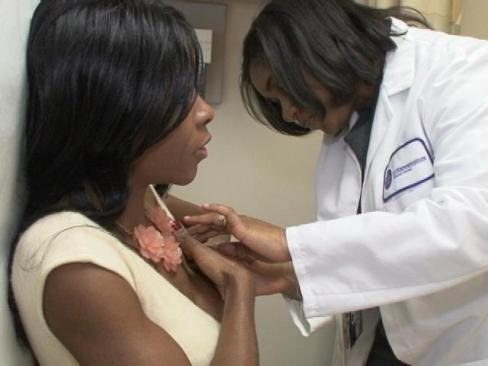
A quick search for cervical cancer information across the web led me to an article on the HuffingtonPost.com’s website, discussing the new guidelines for Pap test issues by the American College of Obstetricians and Gynecologists. They now recommend that women can wait three to five years between checks for cervical cancer. Women ages 21-29 can go three years between visits while other 30 to 65 can wait up to five years.
After reading about this news, I clicked on an article about cervical cancer in the Jamaica Observer. That article carried the exact same information:
There was nothing relating the new guidelines to current recommendations in Jamaica.
The article presents no local information, i.e. no information on where women in Jamaica can go to test a Pap test.
There is no information on the rate of cervical cancer in Jamaica or the percentage of women who currently get Pap test.
There was nothing on risk factors for HPV (which includes sexual intercourse at an early age, multiple partners or a single partner whom had multiple partners).
Cervical cancer is one of the leading causes of morbidity and mortality among women in developing countries. It is the second leading cause of death among Jamaican women. A cross-sectional survey of women in Trinidad found that although the majority (58.4%) knew about cervical cancer, 25% percent were aware of HPV but only 15.9 percent knew of the link between HPV and cervical cancer. There is also growing information about the different strains of HPV that Caribbean women carry and debate about whether the approved vaccines are effective. These are just a bit of information that can enhance an article such as this.
This post is not just calling out the Jamaica Observer. This is representative of a trend I’ve seen while reading articles on news organization websites across the region.
How can journalist across the region improve the quality of health information they present? What type of information do readers expect when they read health information from their newspapers? What effect, if any, does this type of news have on health decision-making? These are but a few of the questions that need answering.
John Snow, Inc. and JSI Research & Training Institute – JSI has developed a self-directed, on-demand, online course that introduces social media tools for HIV prevention andhow to develop, monitor, and evaluate a social media strategy.
The course is intended to introduce the most common social media tools and ways that they can be used in response to HIV prevention. The online course also providesguidance on how to develop a social media strategy and ways to monitor and evaluate social media activities.
The course has been created as part of a JSI capacity building assistance project that helps community-based organizations improve the delivery and effectiveness of HIVprevention services for high risk and/or racial/ethnic minority populations.
According to the Pan American Health Organization, about 5% of the adult population in Latin suffers depression. The most common mental health disorder was the focus of this year’s World Mental Health Day (October 10, 2012). A global crisis, the theme was chosen “to advocate for recognizing the disease and addressing it. Because of the stigma suffered by people with depression, many sufferers hide it or do not talk about it and even avoid treatment.”
PAHO states that “[b]etween 60% and 65% of ill people do not receive care. The lack of appropriate services; of trained health professionals, especially in primary care; and the social stigma associated with mental disorders are some of the barriers to access to appropriate care, in addition to the need for boosting capacity for the identification and early treatment of depression. In the region, it is calculated that less than 2% of the health budget is allocated to mental health, and of this, 67% is spent on mental hospitals.”
To address these issues, a consortium of researchers, clinicians and advocates have called for urgent action and investment for programs to improve the lives of people with mental illness around the globe.
In the interview below, Dr. Pamela Collins, Director of the Office for Research on Disparities & Global Mental Health at the National Institute of Mental Health (NIMH) discusses global mental health as an emerging field, and the role of strategic collaboration in the global environment. At the 3:40 mark, the discussion turns to cell phones: “Wherever you look, people who may not have access to electricity have access to cell phones.” For global mental health, what is cell phone’s role? Although not much have been done with mobile phones in the global mental health area, Dr. Collins mentions HIV/AIDS as an area where cell-phone based interventions have been applied and possibilities for how it might work in mental health.
Earlier in the interview, she mentions Grand Challenges in Global Mental Health. The website lists several Grand Challenges for global mental health, including: stigma, global advocacy, prevention and public awareness. These are all areas within which health communicators can have an impact.
Currently, the NIMH is requesting applications in response to RFA-MH-13-040, “Grand Challenges in Global Mental Health: Integrating Mental Health into Chronic Disease Care Provision in Low- and Middle-Income Countries” (R01). Foreign investigators encouraged to apply! For more information, visit http://grants.nih.gov/grants/guide/rfa-files/RFA-MH-13-040.html
The website gives an abundance of guidelines for different types of research topics. For those interested in ehealth, I wanted to highlight one area: Test the impact of innovative technologies (e.g., mobile phones or telehealth interventions, etc.) and information systems on the clinical management of people with co-morbid mental and chronic health conditions in LMICs.
This webinar will provide pointers for how researchers can effectively communicate health services research (HSR) and public health services and systems research (PHSSR) findings with decision-makers.


 Caribbean Health Communication Blog