
A few days ago, while chatting with @soroyajulian, one of the things that came up was the scope of health communication. Although the topic related to what we wanted to showcase on the blog, it did make me think more about the field in general and the people who work in it. Many health communication researchers and experts work to develop, implement and evaluate effective behavior change campaigns But, the field is much more than that. Areas of active interest today include ehealth applications and their implications, patient-provider communications, health advocacy and the media, impact of the media on health behavior, and communication inequities and health disparities. Some specialize in areas such as HIV/AIDS, others are cancer communication experts, and some at the intersection of environmental health and communication among other areas.
Category: Career
Call for Caribbean papers on sex education
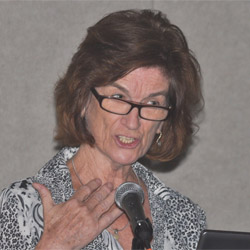 As a budding researcher, one of the thing’s I’ve learned over the last few years is how difficult it is to locate peer-reviewed articles on public health research conducted throughout the Caribbean. Now, we know that the region has an active research base, but much of the knowledge gained from research studies seems to be locked away somewhere. Now, an international public health journal–Sex Education–is aiming to get more researchers from the region to submit their work. Of course, one way to do that is to have an advocate in the region, and in that they have Professor Christine Barrow of Barbados, who recently joined Sex Education‘s editorial board.
Sex Education—the leading international journal on all aspects of sex, sexuality and sex and relationships education—is specifically welcoming contributions from the Caribbean.
Now in its eleventh year, the online journal has an extensive international readership. (Its content is available to developing world researchers and activists through the HINARI scheme.) Sex Education also boasts far-ranging content—everything from insight into Polish teens’ sexual initiation garnered from letters to the editor, to what tribal young men in Bangladesh know about preventing HIV.
In fact, the journal’s scope is more expansive than its title lets on. According to the publishers, “sex education takes place in a range of contexts—at home, in schools, through the media and the community.” Papers focusing on one or more of these settings, quantitative and qualitative studies as well as conceptual and historical analyses are welcome. Sex and relationships education, sexual and reproductive health and sexuality and rights are all on the agenda.
Barbados-based researcher, Professor Christine Barrow, recently became a member of the journal’s editorial board. She says that there is quite a lot of research into adolescent sexuality being conducted in the Caribbean. However, most of it remains in the framework of knowledge, attitude, behaviour and practice (KABP) surveys.
“We know a lot about the ‘what’ of sexuality but not too much about the ‘why’,” she said. “We frame the research around individual attitudes and practices rather than looking at the structural drivers of sexuality. We’re still in a ‘risk’ mode, rather than the ‘vulnerability’ mode which takes a look into the wider environment to assess issues like gender and generational inequalities.”
Barrow said that looking upstream to answer why things are as they are will ultimately lead to better understanding of our context and more responsive programs and policies. She encourages Caribbean participation in this global process.
Inquiries may be addressed to cmbarrow3@gmail.com“>Christine Barrow and editor, p.aggleton@unsw.edu.au“>Peter Aggleton
source: PANCAP.
“Never worry about what you will do next…” Reflections from Dr. George Alleyne, Director Emeritus of the Pan American Health Organization
A conversation with Dr. George Alleyne begining from his formative years in the University of West Indies to his current views about Panamericanism, Equity and a wide range of public health issues. Dr. Alleyne chronicles his career development and his ascendency as an academic and as Director Emeritus of PAHO. He states that he learned not to worry too much about the next steps in life, just to work hard, and the next steps will be become very obvious.
 Caribbean Health Communication Blog